






What does PDRN do in cosmetics? PDRN may help support skin recovery and improve some signs of aging, but the effectiveness of topical products depends on the formulation, concentration, molecular size, and ability to deliver the active ingredient to the skin. It is not “DNA that repairs the skin” or a substitute for dermatological treatment.
Peptides and products described as “biotech cosmetics” should be interpreted similarly: look at the specific ingredients, evidence for the finished product, and actual claims, rather than relying only on words such as “regeneration,” “cell activation,” or “biotechnology.”
What does PDRN do in cosmetics, and how strong is the evidence?
PDRN, short for polydeoxyribonucleotide, consists of fragments of DNA-derived genetic material. In medical research, PDRN has attracted interest because it may be associated with the adenosine A2A receptor and the “salvage pathway”—a pathway that reuses nucleotide components during tissue repair (according to pubmed.ncbi.nlm.nih.gov).
The important distinction is that evidence for PDRN in wound healing support, injectable products, or aesthetic procedures does not automatically prove that every PDRN serum will produce equivalent results. The skin has a stratum corneum barrier, and effectiveness depends on how the active ingredient is stabilized and delivered.
Some recent studies have begun evaluating topical PDRN in models of photo-damaged skin and in small human trials. These findings are noteworthy, but more independent research, longer follow-up periods, and greater consistency in terminology for PDRN, PN, molecular size, and formulation are still needed (according to pubmed.ncbi.nlm.nih.gov).
Reasonable expectations for PDRN skincare
- It may help the skin feel softer, more hydrated, and more comfortable if the formula also contains humectants and soothing ingredients.
- It may be useful in a skin-barrier recovery routine, but it should not be considered a treatment for dermatitis, acne, or scars.
- The ability to improve wrinkles, elasticity, or pigmentation should be assessed based on the specific product, not just the name of the active ingredient.
- Do not assume that a topical product can regenerate deep tissue in the same way as injections or treatments performed at a medical facility.
If your skin is sensitive, prioritize a simple formula and patch-test it on a small area. You can consult a minimalist skincare routine before adding a “biotech” product to your routine.
Skincare peptides and biotech cosmetics: do not equate labels with effectiveness
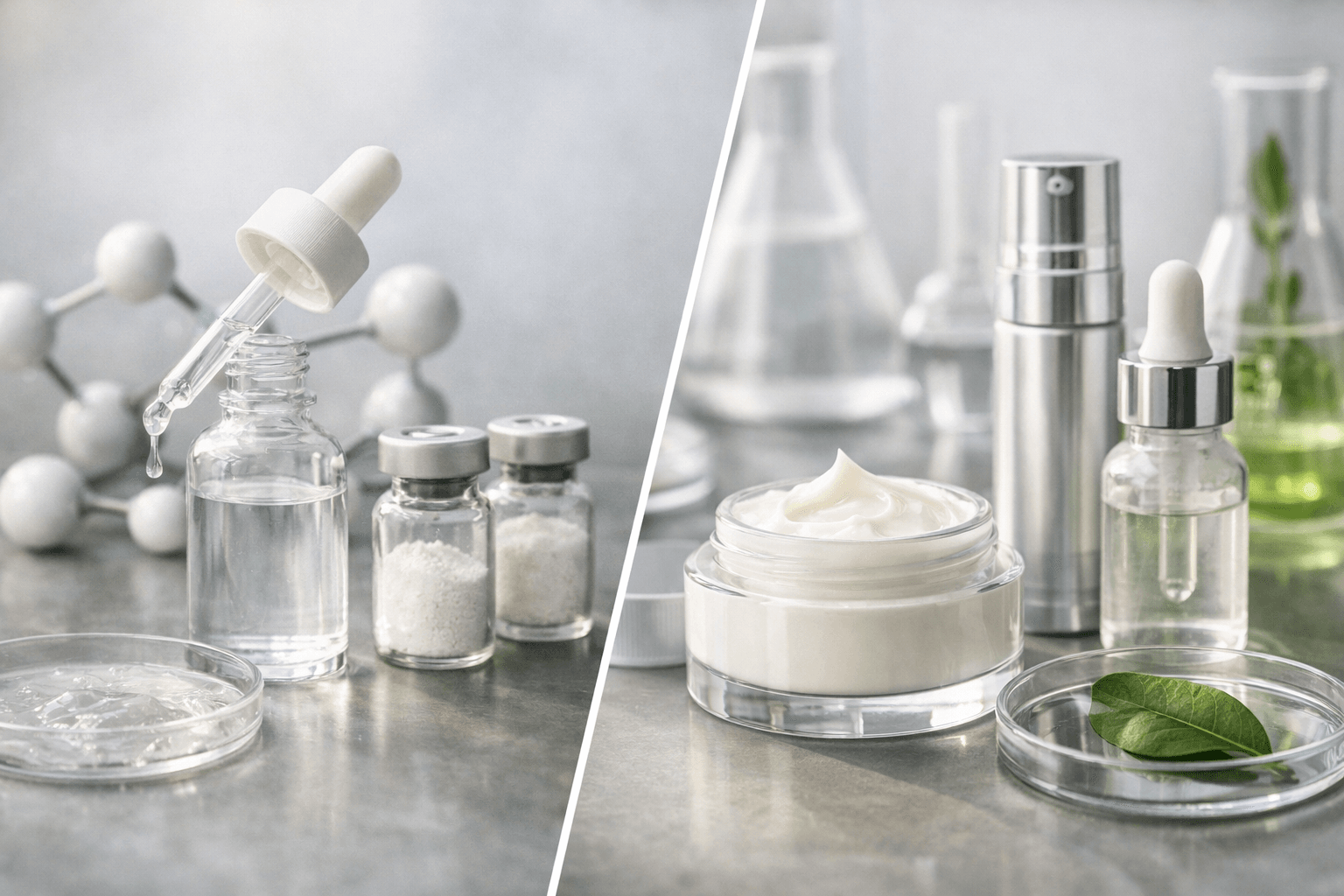
Peptides are short chains of amino acids. In cosmetics, they may be used for various purposes, such as supporting hydration, improving the appearance of wrinkles, or participating in signaling mechanisms on the skin’s surface. However, “peptide” is not a single active ingredient. Palmitoyl tripeptide-1, copper tripeptide-1, acetyl hexapeptide-8, and many other peptides have different structures, data, and roles.
When reading a label, look for the full INCI name rather than simply the word “peptide” on the packaging. Then check the ingredient’s position in the ingredient list, the packaging type, storage instructions, and the claims made by the manufacturer. A peptide near the end of the list is not necessarily ineffective, because many peptides are used at low concentrations; however, sellers should not use this as a basis for promising guaranteed results.
“Biotech cosmetics” is often a way of describing how an ingredient is produced or how a product is formulated, such as through fermentation, cell culture, biosynthesis, or delivery systems. It is not a guaranteed level of effectiveness. The technology may help produce ingredients that are purer, more stable, or more sustainable, but the finished product still needs to be assessed based on its formulation and usage data.
A table distinguishing claims from how much they should be trusted
| Advertising claim | A cautious interpretation | Questions to ask |
|---|---|---|
| “Regenerates skin at the cellular level” | Often marketing language; it does not clarify whether there is a visible effect in people. | Has the product itself been tested in a clinical trial? |
| “Stimulates collagen” | It may be based on cell or model studies and does not necessarily mean a clear reduction in wrinkles. | How was it measured, and over what period? |
| “High-concentration PDRN” | A higher concentration does not automatically mean better penetration or greater effectiveness. | Is the concentration reported for the raw ingredient or the actual active ingredient? |
| “Proprietary peptide” | A trade name does not provide complete information about the structure and data. | Are the INCI name and evaluation documents provided? |
| “Biotech anti-aging” | Biotech describes the technology, not a guaranteed result. | Is there comparative data against the base formula or a control group? |
In particular, be cautious with promises to “erase wrinkles,” “treat melasma,” “cure acne,” or “repair deep damage.” According to FDA, claims that a product affects the structure or function of the skin may go beyond the scope of ordinary cosmetic claims.
How to read cosmetic ingredients to make better purchases
1. Identify your goal before looking at active ingredients
Do you want to reduce dryness and tightness, control acne, improve pigmentation, or address aging? If your goal is barrier repair, humectants and emollients such as glycerin, panthenol, ceramides, or squalane may be more important than a currently “trendy” active ingredient. If your goal is anti-aging, consistent sun protection remains the foundation. See also how to choose a mineral sunscreen if you experience white cast when using mineral products.
2. Read the entire formula, not just the front of the package
- Note the INCI name of the PDRN or peptide.
- Check the accompanying ingredients: humectants, soothing agents, antioxidants, fragrances, and preservatives.
- Examine the packaging: an airtight bottle, pump dispenser, or single-dose tube usually protects the formula better than a jar that is opened frequently.
- Read the storage instructions and the period of use after opening.
3. Look for data that matches the claim
A study on cells, artificial skin, or animals only indicates initial biological potential. More valuable data for users comes from controlled human trials using the complete formula and describing the duration and measurement criteria. If a brand provides only before-and-after photos without controlling lighting, camera angle, and accompanying products, treat them as illustrations rather than conclusive evidence.
4. Assess risk and trial duration
Try one new product at a time, use it as directed, and monitor it for at least several weeks if your goal is to improve texture or wrinkles. Stop using it if you experience prolonged burning or stinging, swelling, a rash, or a clear increase in inflammatory acne. People who are pregnant, breastfeeding, have a skin condition, or have recently undergone a procedure should consult a doctor before using products that make strong repair claims.
In short, PDRN and peptides are ingredient groups worth watching, but they should not be viewed as magic solutions. For PDRN skincare, ask what form the product contains, whether there is human data, and what the realistic goal is. For peptide skincare, read the correct INCI name and evaluate the formula as a whole. As for biotech cosmetics, treat “biotech” as information about how the product was made, not as a certificate of effectiveness.
Reference source
