






Building a minimalist wardrobe in 2026 does not mean getting rid of every colorful item or keeping only a few white shirts. A good wardrobe should serve your actual life: work, leisure, travel, social occasions, and adapting to Vietnam’s weather.
The right approach is to buy less but choose well, prioritizing designs that are easy to coordinate, materials suited to the climate, and items that can be worn in many situations. This is also the spirit of a capsule wardrobe and sustainable fashion: extending the life of clothing through use, care, repair, and reuse instead of constantly buying new items.
Building a minimalist wardrobe in 2026 starts with your real needs
The most common mistake is starting with a list of “10 must-have items” found online. Such lists can be useful for reference, but they cannot replace your own dressing habits. Someone who works from home, an office employee, a parent with young children, and someone who travels frequently for work will all need very different wardrobes.
Take inventory before buying
Set aside an afternoon to take all your clothes out of the wardrobe and sort them into four groups:
- Worn frequently: items that fit well, are easy to coordinate, and suit your routine.
- Rarely worn but for a reason: party clothes, formal workwear, or seasonal clothing.
- Needs repair: loose threads, broken zippers, missing buttons, or hems that need adjusting.
- No longer suitable: too tight, too loose, uncomfortable, or no longer reflective of your current style.
Over the next seven days, record the outfits you actually wear. If an item does not appear in any outfit, do not rush to buy something similar. You may be missing a connecting piece, such as a lightweight jacket, neutral-colored trousers, or suitable shoes.
Choose a coordinating color palette
A versatile wardrobe usually has three layers of color:
- Base colors: black, white, cream, gray, navy, or brown.
- Supporting colors: olive green, denim blue, beige, burgundy, or light blue.
- Accent colors: one or two colors that express your personality through shirts, bags, scarves, or shoes.
You do not need to force yourself to wear only neutral colors. A more practical rule is that each new item should work with at least three items you already own. For example, a pair of olive-green trousers can be worn with a white shirt, a black top, a denim shirt, and a cream sweater. In that case, the item creates more options instead of appearing in only one outfit.
How to buy quality clothing and create versatile outfits
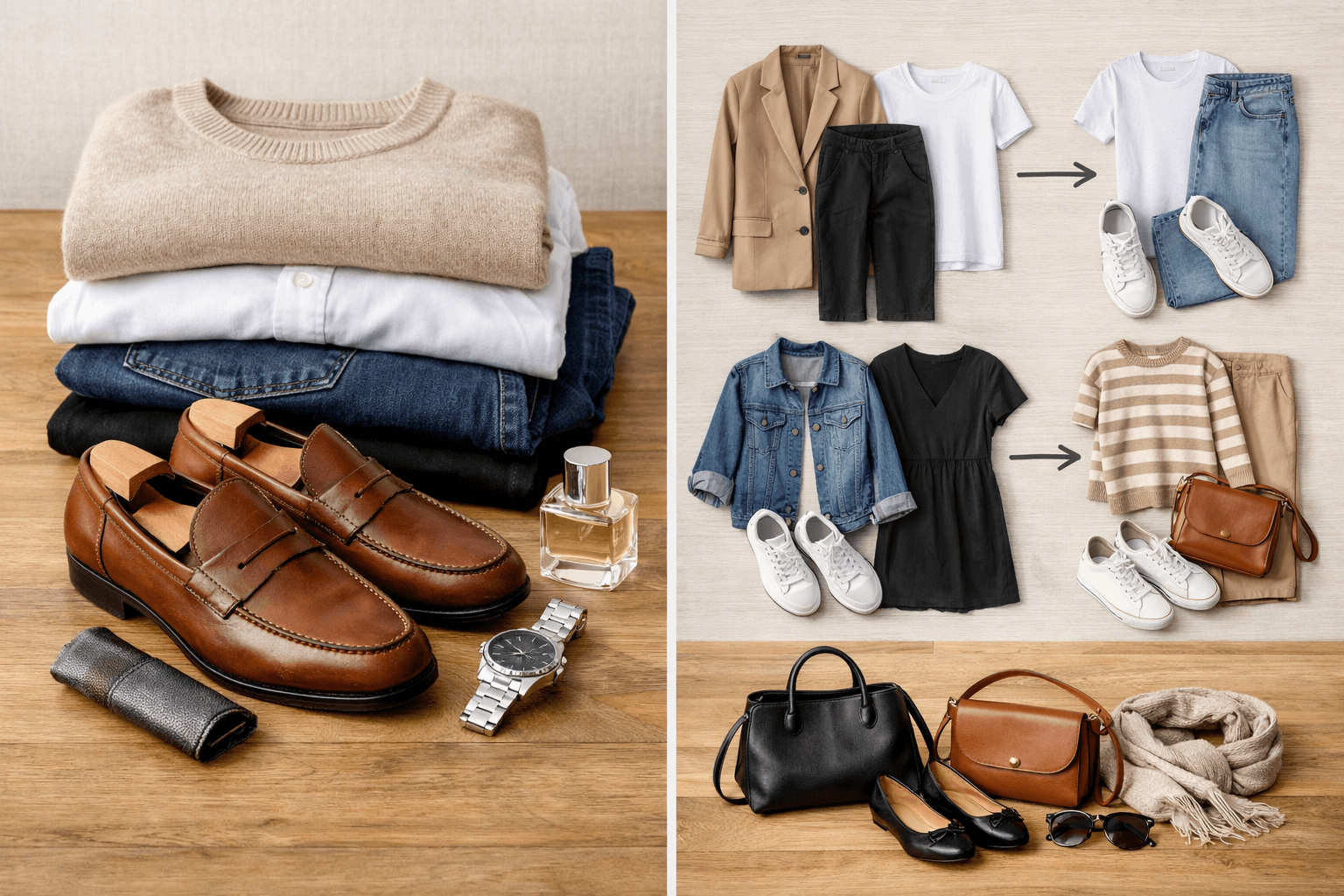
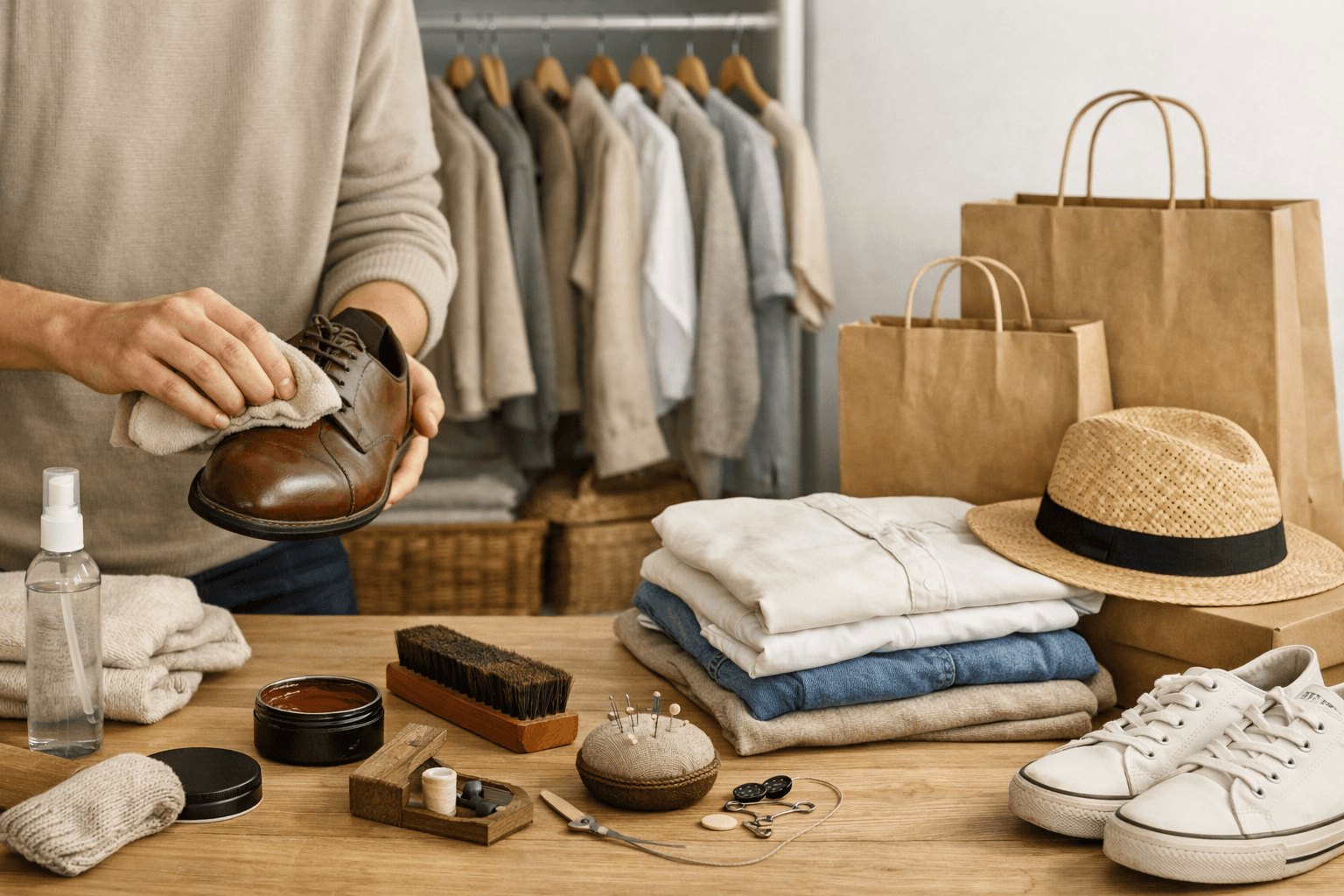
An item is only truly “sustainable” when you wear it for long enough. Therefore, after the shopping stage, the processes of washing, drying, repairing, and discarding also need to be clearly planned.
A practical care routine
- Read the label before the first wash: separate dark-colored items, fasten zippers, and turn garments prone to fading inside out.
- Wash when necessary: jackets, denim, and some outer layers can be aired out or spot-cleaned instead of being washed entirely after a single wear.
- Choose cold or lukewarm water: use a gentle detergent and select a cycle appropriate for the fabric’s structure.
- Dry properly: dry clothes in a well-ventilated place and avoid prolonged exposure to strong sunlight for dark-colored items; sweaters should be laid flat to help prevent stretching.
- Repair promptly: sew on buttons, fix loose threads, or replace zippers as soon as you notice a problem. Small damage is usually cheaper and easier to repair than major damage.
Patagonia’s care guide also recommends washing less often when possible, using cold or lukewarm water, and line-drying to reduce wear on clothing (according to eu.patagonia.com). For synthetic clothing, a microfiber-catching laundry bag may help limit the amount of fiber released into wastewater, but it does not replace buying less and wearing items for longer.
Set rules before checkout
Before buying, answer five questions:
- When will I wear this item?
- Can it be coordinated with at least three items I already own?
- Can I wash and care for it properly?
- Does it fit right now, rather than requiring me to “lose weight first” or “have it altered later”?
- If it were not on sale, would I still want to buy it?
You can also calculate the “cost per wear”: the purchase price divided by the expected number of uses. An expensive shirt worn weekly for many years may be more reasonable than a cheap item worn only once or twice. However, this is a decision-making tool, not a justification for every expensive purchase.
At the end of each season, check your wardrobe once rather than repeatedly clearing it out on impulse. Items that are still in good condition but no longer used can be resold, exchanged, given to the right person, or sent to an appropriate take-back program. According to the waste-reduction hierarchy, the priority should be to buy less, reuse, and repair before considering recycling (according to epa.gov).
Conclusion: fashion in 2026 does not necessarily mean chasing a new list of trends. A good wardrobe is built around real needs, a coordinating color palette, climate-appropriate materials, reliable construction, and clear shopping rules. Start by taking inventory of what you already have, repairing items that are still usable, and buying only pieces that help create more outfits. Buying less is meaningful when each choice is genuinely better.
Reference source
