






Skincare while losing weight is not just about applying more moisturizer. When weight drops quickly, the skin has to adapt to changes in body volume, while a low-calorie diet may leave you deficient in protein, essential fats, or micronutrients. Common results include dry, dull, easily irritated skin, stretch marks, or more noticeable loose skin.
The realistic goal is to maintain the skin barrier, limit sun damage, preserve muscle, and avoid overly extreme weight loss. Moisturizer can improve the feeling of dryness and make the skin’s surface look smoother, but it cannot “pull” excess skin back to its original state. If you are taking a GLP-1 medication, pay particular attention to your water and protein intake and to signs of nutritional deficiency.
Why does skin change when weight drops quickly?
Skin gets its elasticity from collagen, elastin, connective tissue, and the underlying fat layer. When the body has been heavier for a long time, these structures become stretched. After weight loss, especially around the abdomen, upper arms, thighs, breasts, or under the chin, the skin may not fully retract.
The extent of loose skin after weight loss depends on age, genetics, how long you were overweight, the total amount of weight lost, sun exposure, smoking, and the rate of weight loss. People who lose a large amount of weight after bariatric surgery or on a very low-calorie diet may notice more pronounced excess skin.
Rapid weight loss also usually comes with smaller portions. If meals are low in protein or you do not monitor nutritional quality, your hair, nails, and skin may be affected. For people taking GLP-1 medications, early satiety can make it harder to eat enough nutrients; temporary hair loss after rapid weight loss may be related to the body’s stress response or a deficiency in protein, iron, zinc, and other nutrients (according to health.clevelandclinic.org).
Therefore, do not judge your skin based only on the first few weeks. Monitor dryness, itching, redness, stretch marks, folds, and areas of skin rubbing throughout the weight-change process.
At-home skincare routine while losing weight
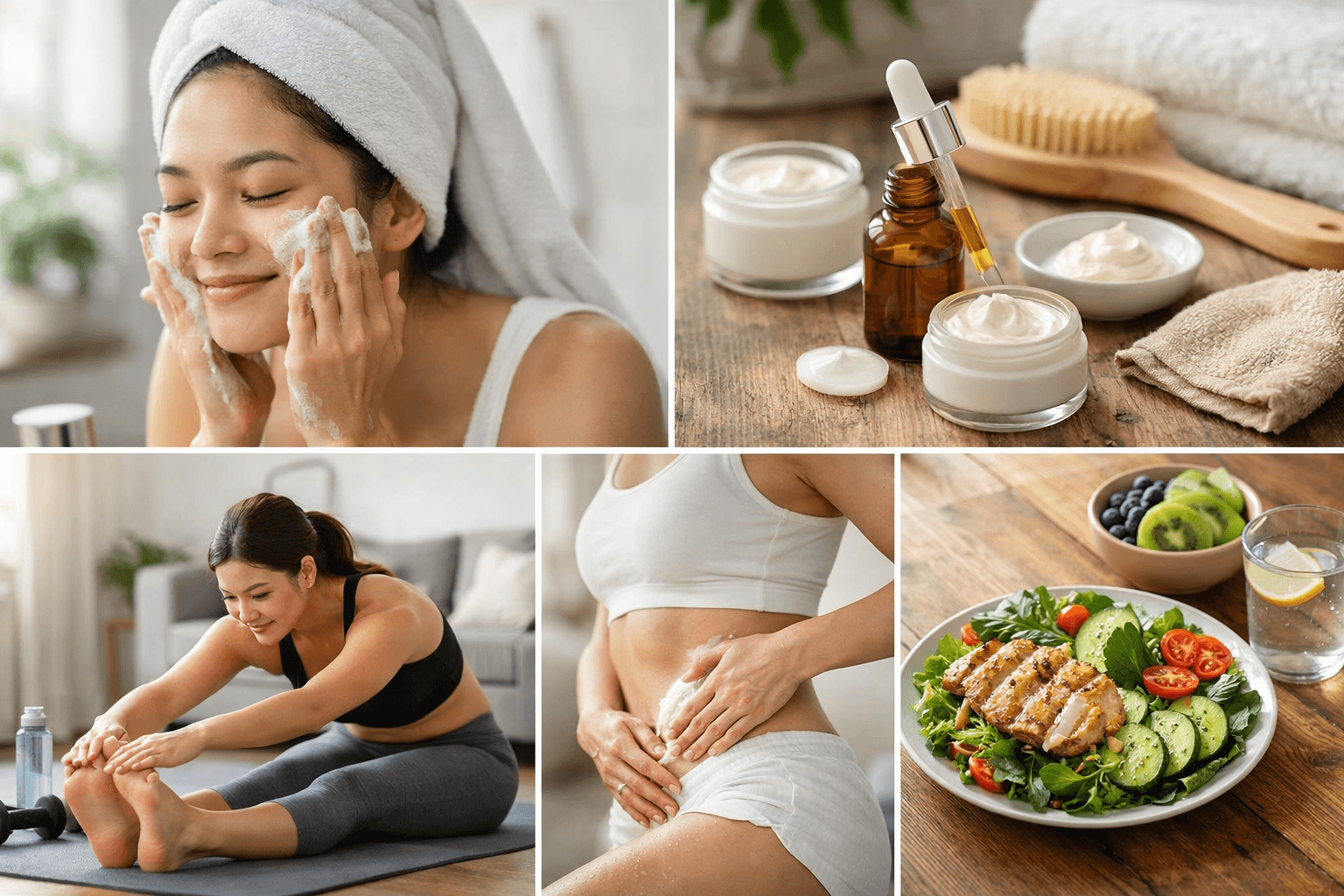
1. Cleanse gently and moisturize at the right time
Use a gentle cleanser; there is no need to scrub hard or exfoliate every day. Bathe in comfortably warm water rather than very hot water, as high temperatures can make skin drier and itchier. After bathing, gently pat dry and apply moisturizer while the skin is still slightly damp.
For effective moisturizing while losing weight prioritize formulas containing ceramides, glycerin, hyaluronic acid, petrolatum, or plant butters if your skin is dry. Lotion is suitable for normal to oily areas; cream or balm is better for dry, rough areas such as the abdomen, knees, elbows, and shins. Apply it all over your body at least once a day, especially after bathing.
If your skin is sensitive, temporarily reduce products containing fragrance, volatile alcohols, high concentrations of acids, and retinoids. You can refer to a minimalist skincare routine for each skin condition to avoid using too many products at once.
2. Use sun protection on both your face and body
UV rays break down collagen and elastin, making wrinkles, dark spots, and less firm-looking skin more noticeable. Use broad-spectrum, water-resistant sunscreen with SPF 30 or higher on exposed skin; combine it with long sleeves, a hat, and shade when outdoors (according to aad.org).
Do not overlook the neck, chest, shoulders, backs of the hands, and arms. If you have sensitive skin or easily irritated eyes, you can learn more about how to choose a mineral sunscreen that does not leave a white cast. When outdoors for a long time, reapply as directed on the label, especially after swimming or sweating.
3. Combine exercise to preserve muscle
“Firming” creams cannot replace maintaining muscle mass. Resistance training two to three times a week, according to your ability and with professional guidance if you are a beginner, can help the body look fuller and more balanced as fat decreases. Walking, cycling, or swimming supports overall health but does not directly remove excess skin.
Increase intensity gradually, get enough sleep, and avoid overexertion while eating very little. If you experience dizziness, prolonged weakness, an irregular heartbeat, or unexpected weight loss, you should speak with a doctor.
4. Eat enough nutrients and drink enough water
Prioritize protein at meals, such as fish, eggs, lean meat, yogurt, tofu, beans, and legumes. Include vegetables, fruit, whole grains, and healthy fats to support a varied diet. Do not take high doses of biotin, collagen, zinc, or iron on your own without medical advice; testing and appropriate nutritional counseling are more suitable when you show signs of deficiency.
Drink water regularly throughout the day, but do not view water as the only way to “hydrate” the skin. Dry skin still needs moisturizer and a healthy protective barrier. For people taking GLP-1 medications, eat smaller meals, eat slowly, and deliberately choose nutrient-dense foods rather than focusing only on reaching a target weight.
Loose skin after weight loss: When is intervention needed?
Give your body time to stabilize its weight before evaluating the final results. During this period, firming body care should focus on moisturizing, sun protection, exercise, and reducing friction in skin folds. Retinol creams may help slightly improve skin texture in some areas, but should be introduced gradually and discontinued if irritation occurs; topical products generally have limited effects on significantly loose skin (according to aad.org).
If excess skin causes chafing, inflammation, pain, difficulty moving or maintaining hygiene, or significant emotional distress, see a dermatologist or plastic surgeon. Energy-based treatments such as ultrasound or radiofrequency may be suitable for some cases of mild laxity, but they do not replace surgery when there is a large amount of excess skin. Do not buy products advertised as able to “burn fat and tighten skin” based solely on before-and-after images.
If you are researching GLP-1 and skincare, tell your doctor if you develop severe dry skin, a rash at the injection site, significant hair loss, fatigue, or excessively rapid weight loss. The American Academy of Dermatology recommends gentle cleansing, ceramide-containing moisturizer, moisturizing the entire body, and using sunscreen with SPF 30 or higher when taking this type of weight-loss medication (according to aad.org).
In summary: lose weight according to a sustainable plan, eat enough protein and micronutrients, do resistance training, moisturize while the skin is still slightly damp, use daily sun protection, and do not expect topical creams to address large amounts of excess skin. A simple but consistent routine is often more helpful than constantly changing products.
If you are interested in ingredients such as peptides or biotechnology-based products, read more about how to critically evaluate PDRN and peptide advertising before buying.
Reference source
