






How to care for your scalp at home does not require many products, but it does require the right frequency and products suited to your scalp condition. When cleansed adequately, the scalp may feel less greasy and itchy, have less unpleasant odor, and provide a better environment for hair growth. This is also part of scalp care —the approach of caring for your scalp like you care for your facial skin, rather than focusing only on the hair shaft and ends.
The basic routine consists of four steps: cleansing properly, monitoring your scalp condition, exfoliating in a controlled manner, and protecting your scalp from heat, chemicals, and irritating habits.
How to care for your scalp at home starts with cleansing properly
The scalp produces oil and sweat and accumulates styling products every day. However, shampooing too infrequently can make the roots greasy and prone to itching, while scrubbing too vigorously or using water that is too hot can leave the scalp drier, tighter, and more sensitive.
Choose shampoo based on your scalp condition
- Oily, quickly greasy scalp: prioritize a shampoo that cleanses effectively without leaving the scalp dry or irritated. If you need to shampoo daily, choose a gentle formula and reduce the amount of heavy styling products.
- Dry, tight, or easily irritated scalp: choose a gentle shampoo, avoid strong fragrances, and do not scrub vigorously while washing.
- Persistent dandruff: consider a specialized shampoo according to the directions on the label. If dandruff is severe, red, painful, or keeps recurring, see a doctor instead of continually switching products.
When shampooing, wet your hair thoroughly, lather the shampoo in your palms, and then apply it to the scalp. Use your fingertips, not your nails, to massage gently for about one minute, then rinse thoroughly. Conditioner should be applied only from the mid-lengths to the ends, unless the product is specifically designed for the scalp.
Scalp exfoliation and massage: do just enough to avoid irritation
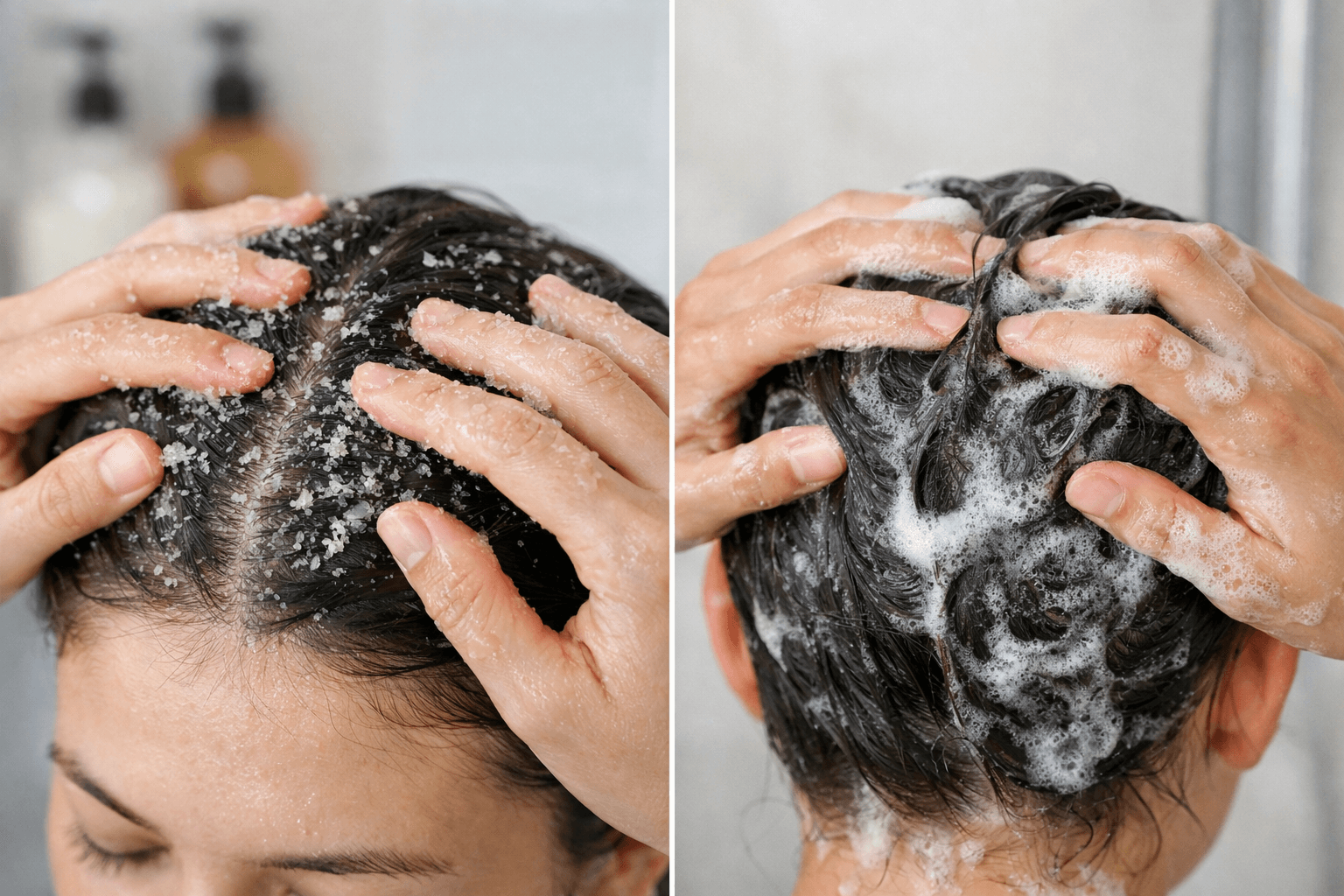
Scalp exfoliation can be helpful if you frequently use styling products or feel that your scalp has accumulated a lot of oil. However, it is not a required step for everyone and should not be done when the scalp is scratched, inflamed, breaking out, or severely itchy.
How to exfoliate the scalp safely
- Choose a product clearly labeled for scalp use, and avoid using sugar, coarse salt, or rough materials to scrub directly.
- Part your hair into several sections so the product can reach the scalp evenly.
- Apply an appropriate amount and move your fingertips gently without scratching or pressing hard.
- Rinse thoroughly and monitor how your scalp feels over the following 24 hours.
If you are just starting, use it infrequently and adjust according to your scalp’s response rather than following a fixed schedule. If burning, redness, excessive flaking, or hair breakage from vigorous handling occurs, discontinue the product.
How to massage the scalp properly
How to massage the scalp properly can make shampooing more comfortable and help distribute the shampoo. Place your fingertips on the scalp and apply gentle pressure in small circular motions, moving from the front hairline and temples to the crown and nape. Spend only a few dozen seconds on each area; there is no need to pull the hair or use your fingernails.
You can massage briefly on a dry scalp or do so while shampooing. If you use hair oil, use very little and avoid applying it close to the scalp if your hair becomes greasy easily, you are prone to breakouts, or you have oily dandruff.
Build a simple scalp care routine and know when to see a doctor
A practical routine should be easy to maintain rather than contain too many steps:
- Daily: brush your hair gently, keep your brush and pillowcase clean, and avoid tying your hair too tightly while it is still wet.
- Every time you wash your hair: cleanse the scalp, rinse thoroughly, and dry your hair by gently blotting rather than rubbing vigorously.
- Weekly or as needed: assess the levels of greasiness, itching, and dandruff, and consider exfoliation if your scalp is suitable for it.
- When styling: remove styling products at the end of the day or as directed, while also limiting excessive heat.
Think of your scalp routine as an extension of your personal care routine. If you are simplifying your beauty routine, you can also refer to a minimalist skincare routine to build habits that are streamlined but consistent. When choosing products, do not rely solely on ingredient-based advertising; read the directions for use, consider the potential for irritation, and prioritize products suited to your actual condition. A thoughtful approach to reading cosmetic information is also discussed in the guide to reading biotech cosmetic advertising.
You should seek professional advice if your scalp remains itchy or painful, develops thick scales or pustules, you experience patchy hair loss or discharge, or it does not improve after you have adjusted your washing routine. These signs may not be caused solely by shampoo or improper hygiene.
Conclusion: effective scalp care is not about washing as aggressively as possible, but about balance. Choose shampoo for your scalp based on its condition, massage gently, exfoliate in a controlled manner, and monitor your scalp’s response. When the scalp is healthier, your hair care and beauty routine will also be easier to maintain.
Reference source
