






Whether you are pushing a shopping cart or bending down to put on your shoes, you use your core muscles for many everyday activities. The core also helps support balance, posture, and body stability (according to mayoclinic.org).
Contrary to popular belief, the core does not consist only of the abdominal muscles. This muscle group includes many muscles around the trunk, back, hips, and pelvis that work together to keep the torso stable while the arms and legs move.
Important core muscles include:
- Erector spinae. A group of muscles running along the back that helps keep the torso upright and supports extension, side bending, and rotation of the trunk.
- Rectus abdominis. This is the muscle group commonly known as the “six-pack,” and it is involved in bending the torso forward.
- Oblique muscles. The internal and external obliques help rotate or bend the torso to the side.
- Transversus abdominis. Located deep around the front and sides of the trunk, this muscle helps stabilize the spine and pelvis.
- Multifidus. Small muscles located along the spine that help control and stabilize individual segments of the spine.
Other muscles also involved in the core system include:
- the pelvic floor
- the diaphragm
- the gluteal muscles
- muscles attached to the pelvis, such as the hamstrings, hip flexors, and hip adductors
Strengthening these muscle groups can help improve torso stability, support the spine, and help you perform upper- and lower-body movements more efficiently. A core exercise is any exercise that requires the abdominal and back muscles to work together to control the trunk (according to mayoclinic.org).
Below are core-strengthening exercises at three levels. Prioritize technique, controlled movement, and steady breathing rather than trying to exercise for longer or increase the number of repetitions once your form becomes unstable.
Exercises for beginners
If you are new to exercise or have taken a long break, start with the simple movements below. If you are unsure about your technique, you can ask a qualified personal trainer for guidance and adjust the number of sets and repetitions according to your fitness level.
In core exercises, “engaging your core” does not mean holding your breath or pulling your stomach in as hard as possible. Keep your spine in a natural position, gently brace your abdomen as if preparing for a light impact to the torso, and continue breathing steadily. When your torso begins to sway, sag, or arch excessively, reduce the range of motion or duration, or switch to an easier variation.
Bridge – a good core exercise for beginners
The bridge, also called a glute bridge, primarily targets the gluteal muscles but also requires the core to control the position of the pelvis and spine (according to mayoclinic.org).
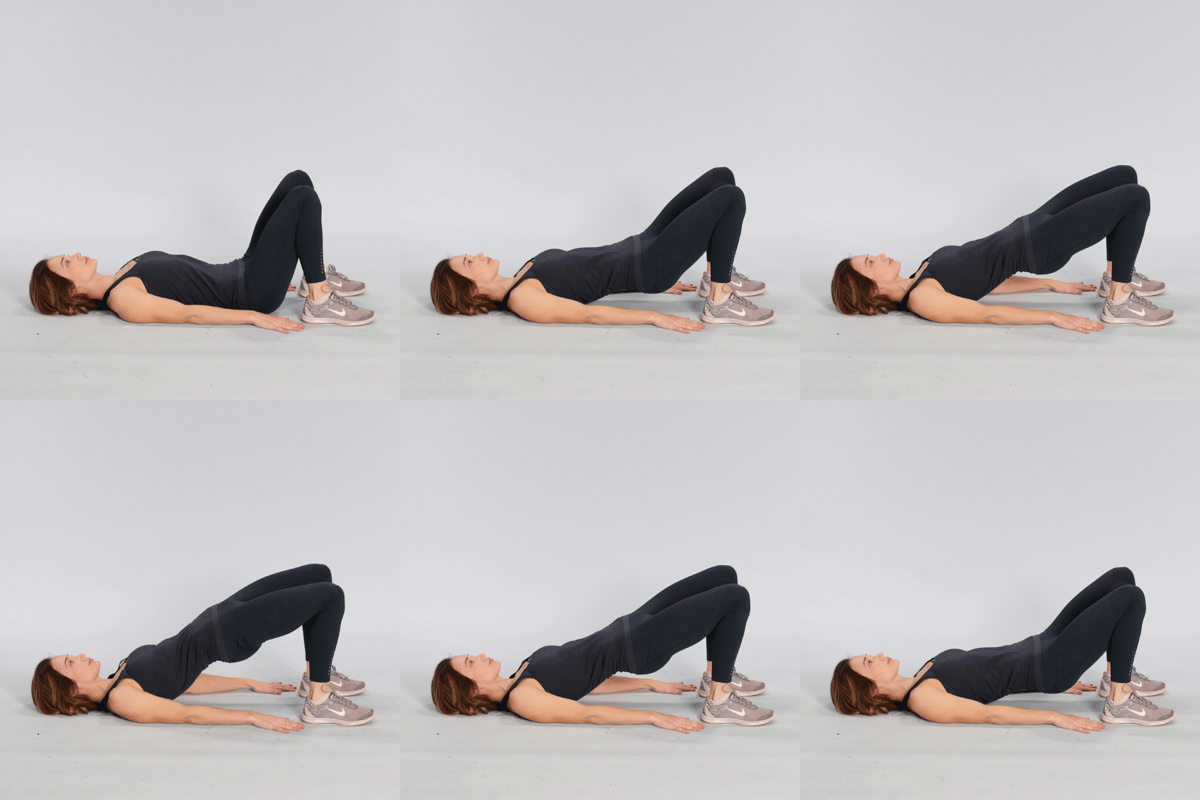
- Lie on your back with your knees bent and your feet flat on the floor, hip-width apart. Place your arms alongside your body with your palms facing down.
- Gently engage your core and glutes, keeping your back in a neutral position; do not arch your back or excessively tilt your pelvis.
- Raise your hips until your body forms a relatively straight line from your shoulders to your knees.
- Hold for about three deep breaths, or for up to 10–30 seconds if you can maintain proper form.
- Perform 1–3 sets of 8–12 repetitions per set, or 3–5 holds.
Crunch
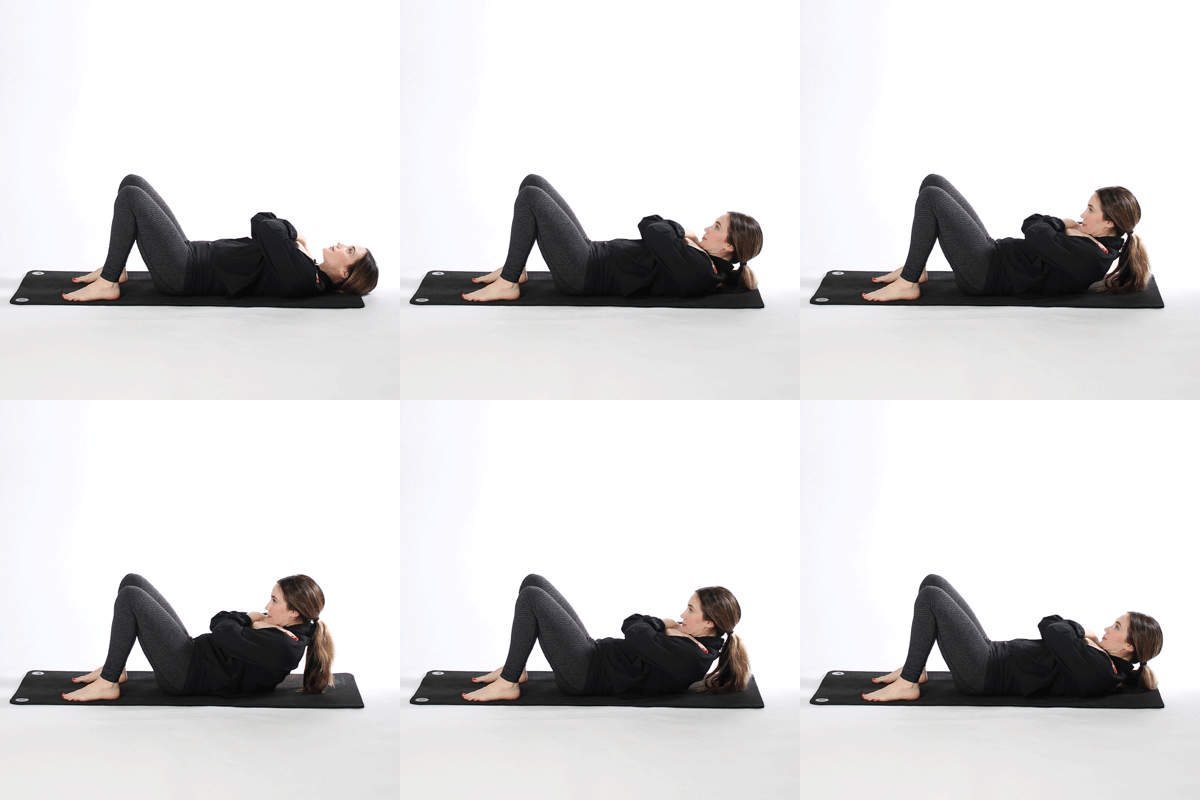
The crunch is a classic exercise that focuses on the abdominal muscles. As you perform it, lift your head and shoulders using your abdominal muscles rather than pulling on your neck or relying on momentum.
If you have lower back pain, perform the exercise very slowly with fewer repetitions. People with persistent back pain or pain that worsens with movement should consult a health care professional before exercising; crunches are not suitable for everyone.
- Lie on your back with your knees bent and your feet flat on the floor, hip-width apart. Keep your head and spine aligned, and cross your arms over your chest.
- Engage your core, relax your neck and shoulders, and slightly tuck your chin. Lift your head and shoulders off the floor while keeping your lower back, pelvis, and feet on the floor.
- Pause briefly, then slowly lower your upper body.
- Start with 1 set of 8–12 repetitions.
Supine toe tap
The supine toe tap is a Pilates-inspired exercise that helps train your ability to keep your core stable while your legs move. It generally creates less movement in the spine than a crunch, but you should still stop if pain occurs.
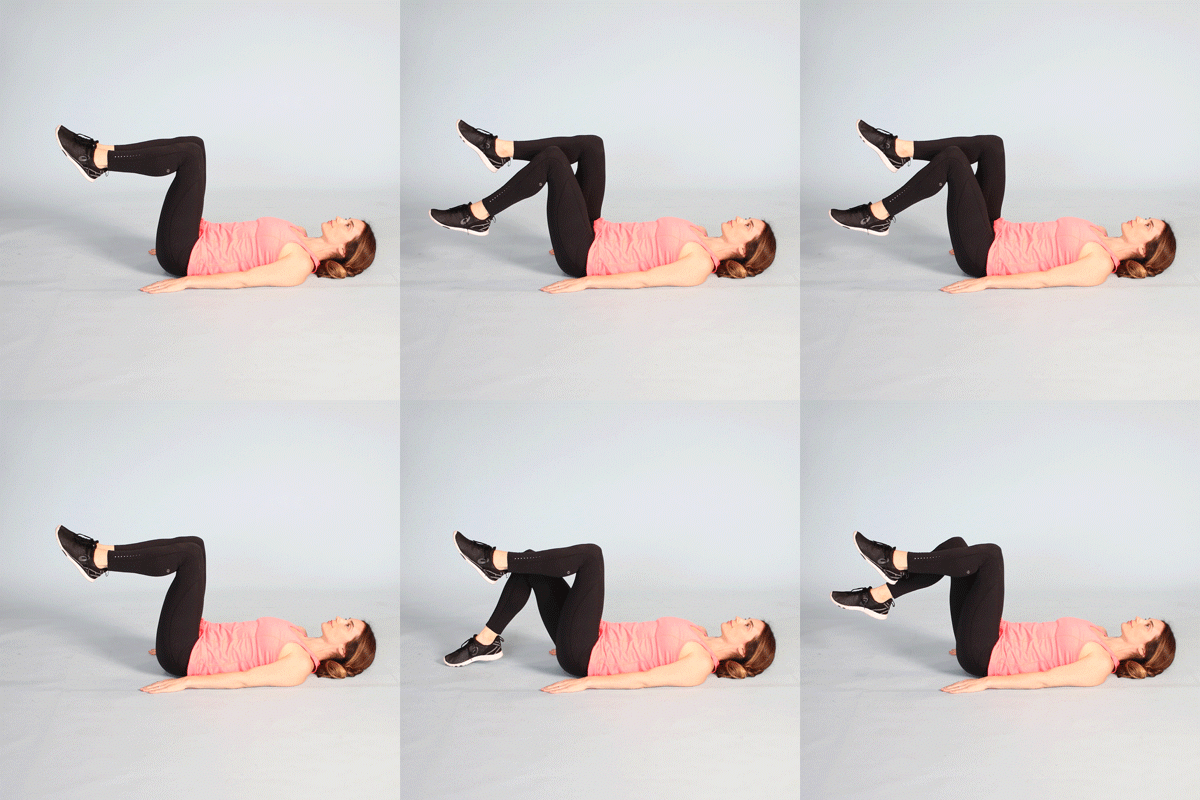
- Lie on your back and lift both legs so that your hips and knees are bent at approximately 90 degrees. Place your arms alongside your body.
- Engage your core and gently lower your right foot to tap the floor while keeping your left leg still and your back stable.
- Lift your right leg back to the starting position.
- Switch sides and repeat with your left leg.
- Start with 1 set of 8–12 repetitions per side.
Bird dog
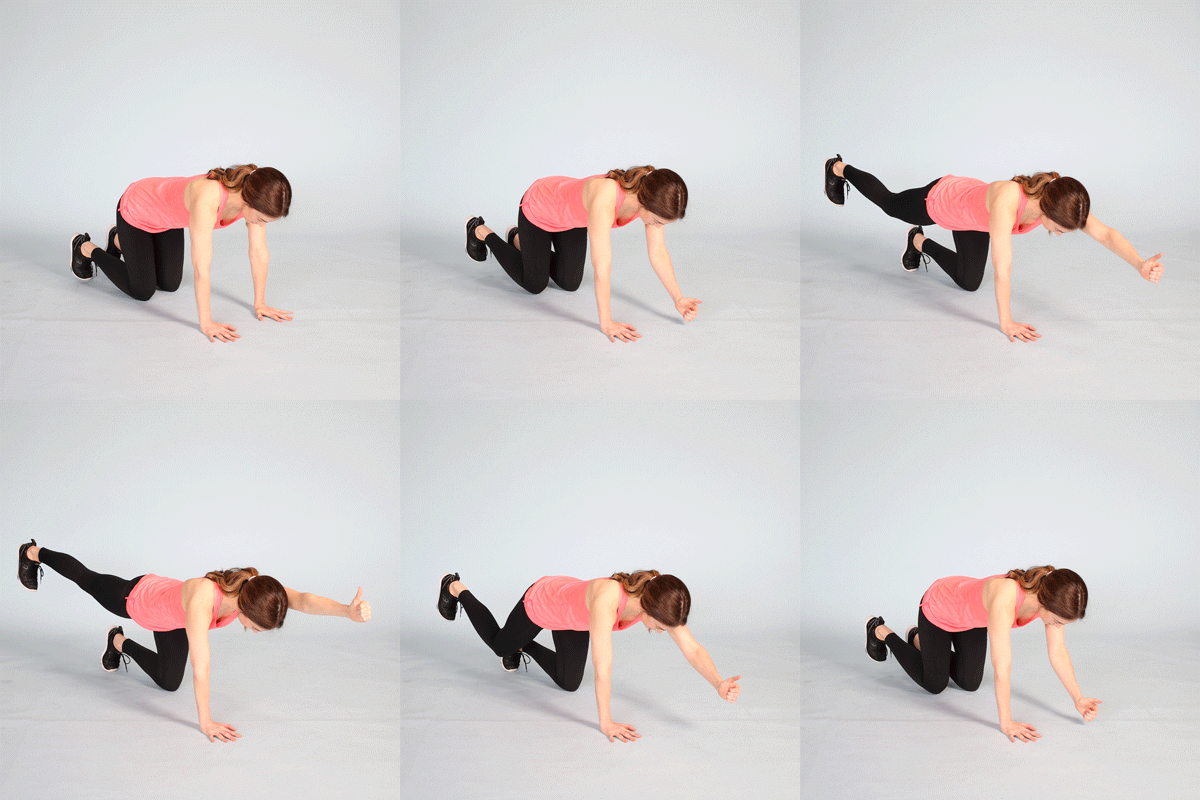
The bird dog targets the abdominal and back muscles while also training coordination, balance, and lower-back stability. The goal is to keep your hips and shoulders level without allowing your back to sag or rotate as your arm and leg extend (according to acefitness.org).
- Start on all fours, with your hands under your shoulders and your knees under your hips.
- Engage your core and extend your right leg back to about hip height while simultaneously extending your left arm forward to about shoulder height. Keep your spine neutral and do not arch your back.
- Hold briefly for 1–3 breaths, then lower your arm and leg with control.
- Switch sides, extending the left leg and right arm.
- Start with 1 set of 8–12 repetitions per side.
Bicycle crunch
This variation combines trunk flexion with gentle rotation, targeting the obliques, rectus abdominis, and hips. Move slowly, keep your elbows open, and avoid pulling on your neck with your hands.
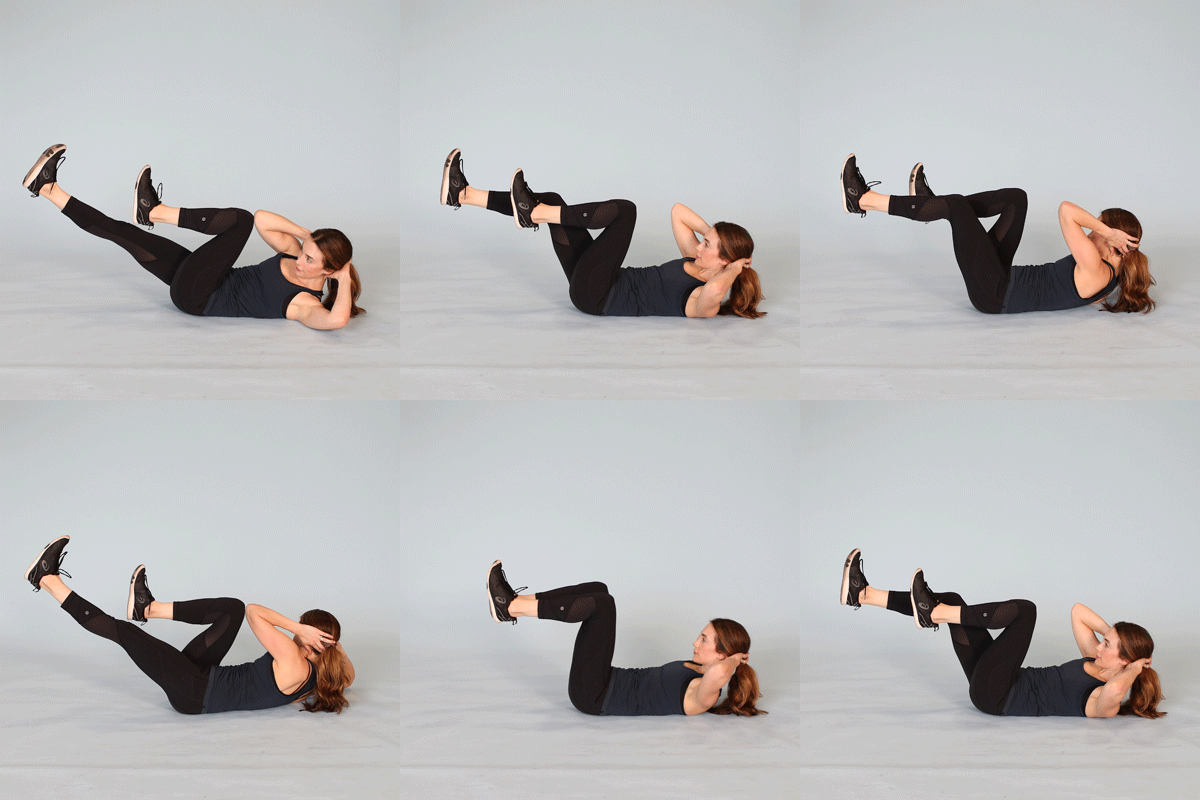
- Lie on your back, bringing your left knee toward your chest while extending your right leg and lifting it slightly off the floor. Place your hands behind your head, but do not use them to pull on your neck.
- Lift your right shoulder off the floor and bring your right elbow toward your left knee.
- Lower your right shoulder while extending your left leg and bringing your right knee toward your chest.
- Lift your left shoulder and bring your left elbow toward your right knee.
- Start with 1–3 sets of 8–12 alternating repetitions per side.
Intermediate exercises
Once you have good control of the basic exercises, you can increase the challenge with the intermediate movements below. Move up a level only if you can keep your spine stable and your breathing steady.
Plank
The plank is a full-body exercise that requires your core to resist movement while also engaging the shoulders, arms, back, glutes, and legs. If your hips sag or rise too high, switch to a knee plank or reduce the hold time.
- Start on all fours, with your hands under your shoulders and your knees under your hips.
- Extend one leg at a time behind you, placing your toes on the floor. Keep your feet hip-width apart and brace your core.
- Hold for 10–30 seconds, or for as long as you can maintain good form.
- Perform 2–4 sets, resting between sets.
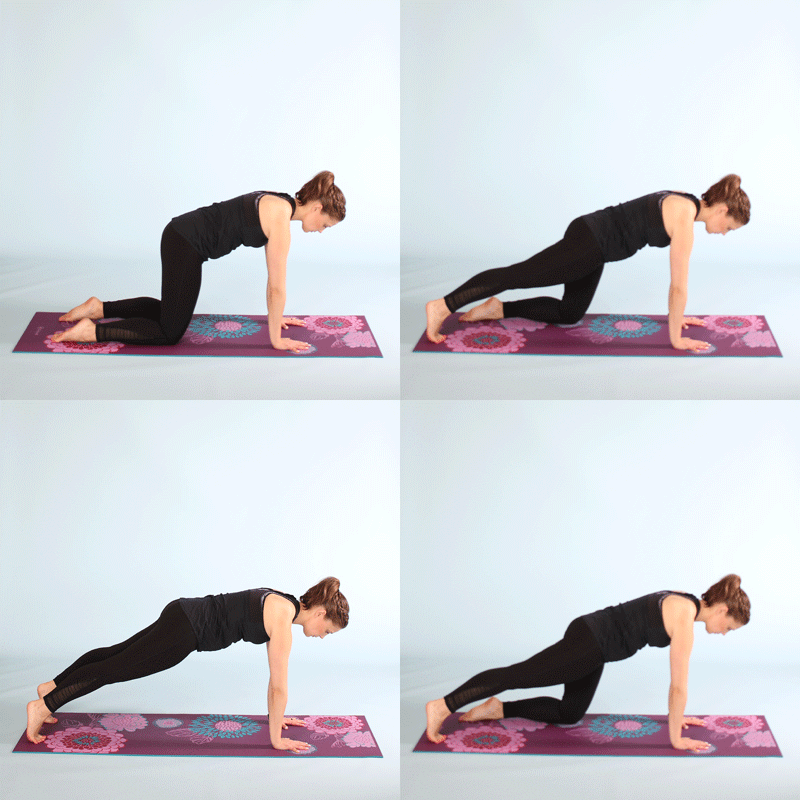
To make it easier, place both knees on the floor, keep your shoulders positioned over your elbows or hands depending on the variation, and maintain a straight line from your shoulders to your knees. For a forearm plank, your elbows should be directly under your shoulders.
Warrior crunch
The warrior crunch combines a wide squat with a side bend, engaging the core along with the thighs, glutes, and quadriceps.
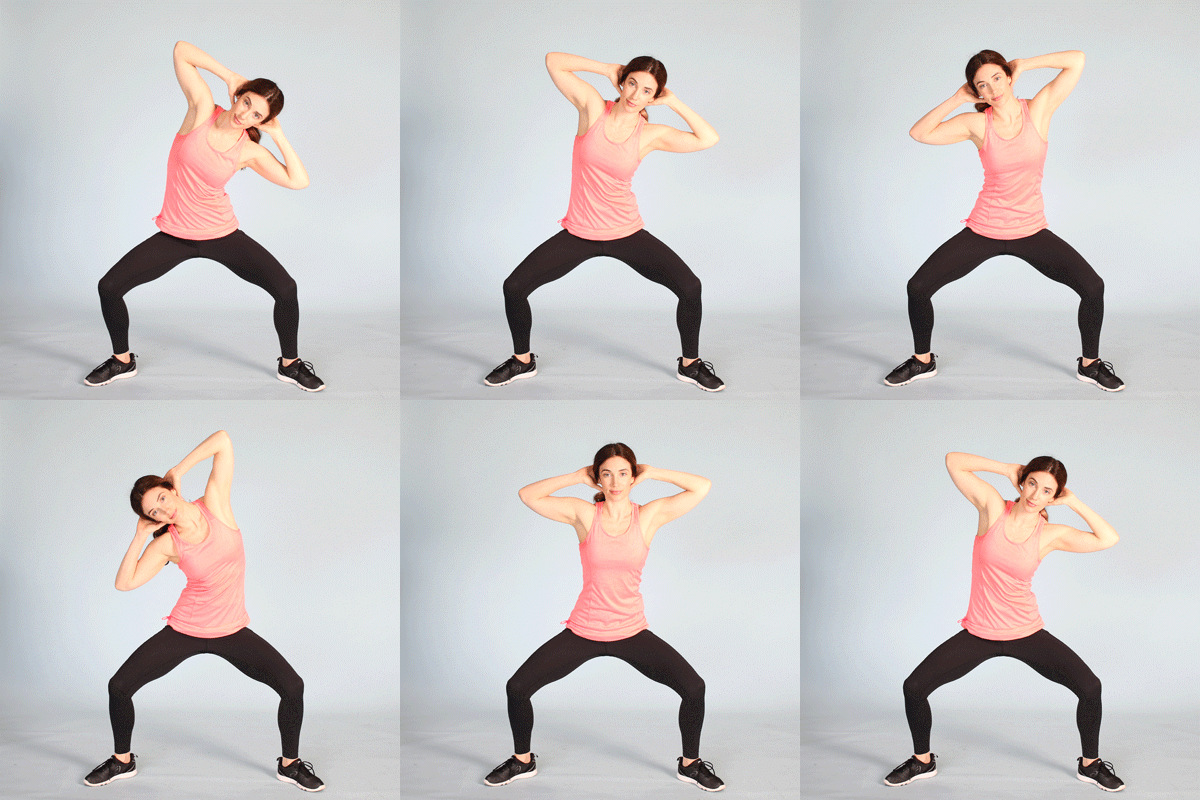
- Stand with your feet slightly wider than shoulder-width apart, toes pointing outward. Place your hands behind your head and open your chest.
- Brace your core and glutes, and bend your knees until your thighs are nearly parallel to the floor.
- Bend your torso to the right, bringing your right elbow toward your right thigh; return to center, then switch to the left side.
- Start with 1 set of 8–12 repetitions per side.
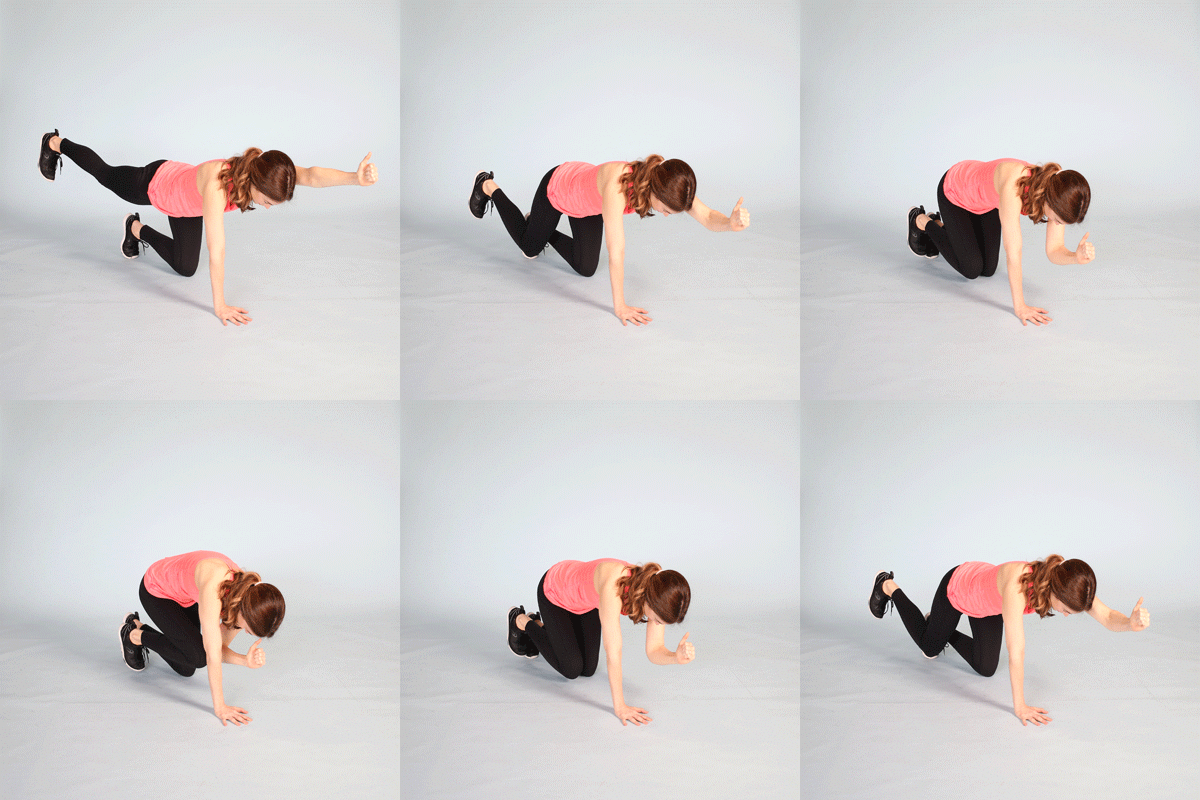
Bird dog with elbow-to-knee pull
This variation adds a controlled flexion-and-extension movement, engaging the abdominal and back muscles while you develop trunk control and core flexibility.
- Start on all fours, with your hands under your shoulders and your knees under your hips.
- Brace your core, extend your right leg behind you and your left arm forward, and keep your back neutral.
- Slowly draw your right knee and left elbow toward each other. They do not need to touch.
- Extend your arm and leg back to the starting position.
- Perform 1–3 sets of 8–12 repetitions per side.
Advanced exercises
After mastering the intermediate exercises, you can try more advanced movements. These exercises require greater strength, coordination, and stability, so prioritize an unweighted variation or a slower pace before increasing the challenge.
Mountain climber
The mountain climber combines a plank with a knee-drive movement to train the core, shoulders, balance, and endurance. Start slowly to avoid bouncing your hips or arching your back.
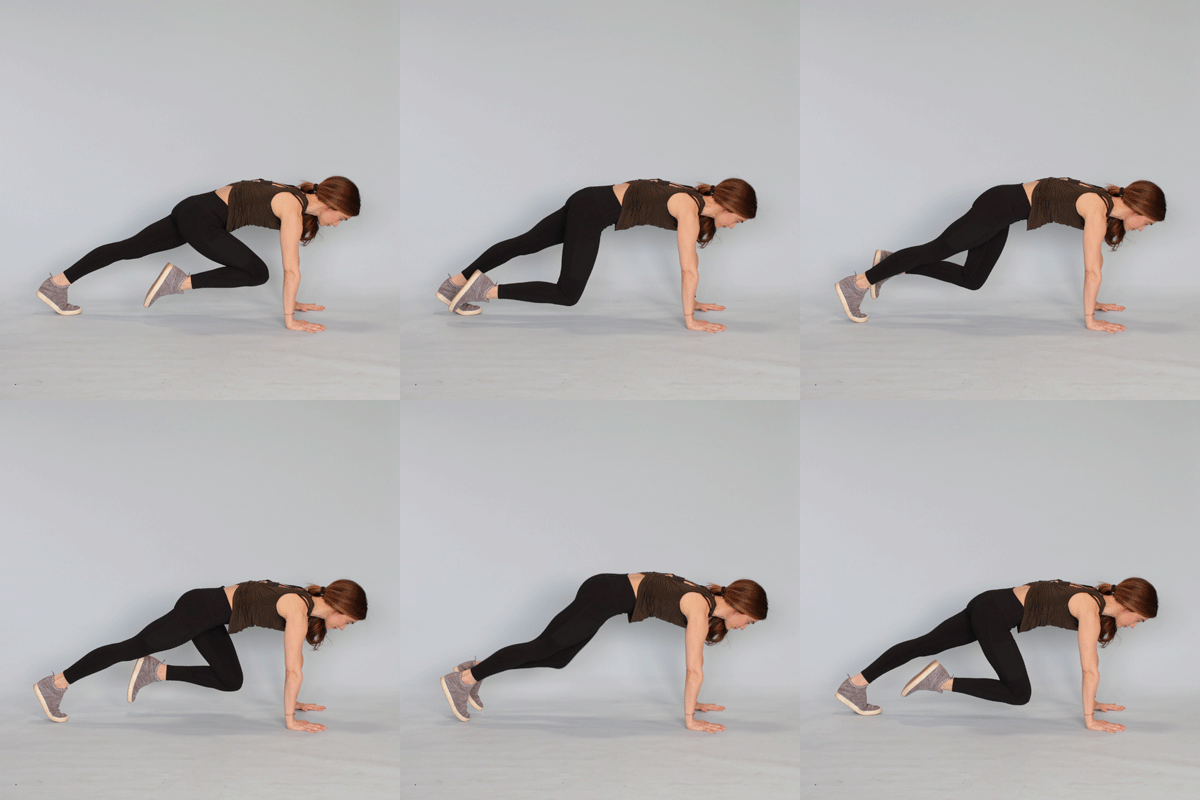
- Start in a plank position with your hands under your shoulders and your core braced.
- Drive your right knee toward your chest, keeping your back relatively straight and your hips stable.
- Return your right leg to the starting position while driving your left knee toward your chest.
- Continue alternating at a pace you can control. Start with 1–3 sets of 8–12 repetitions per side.
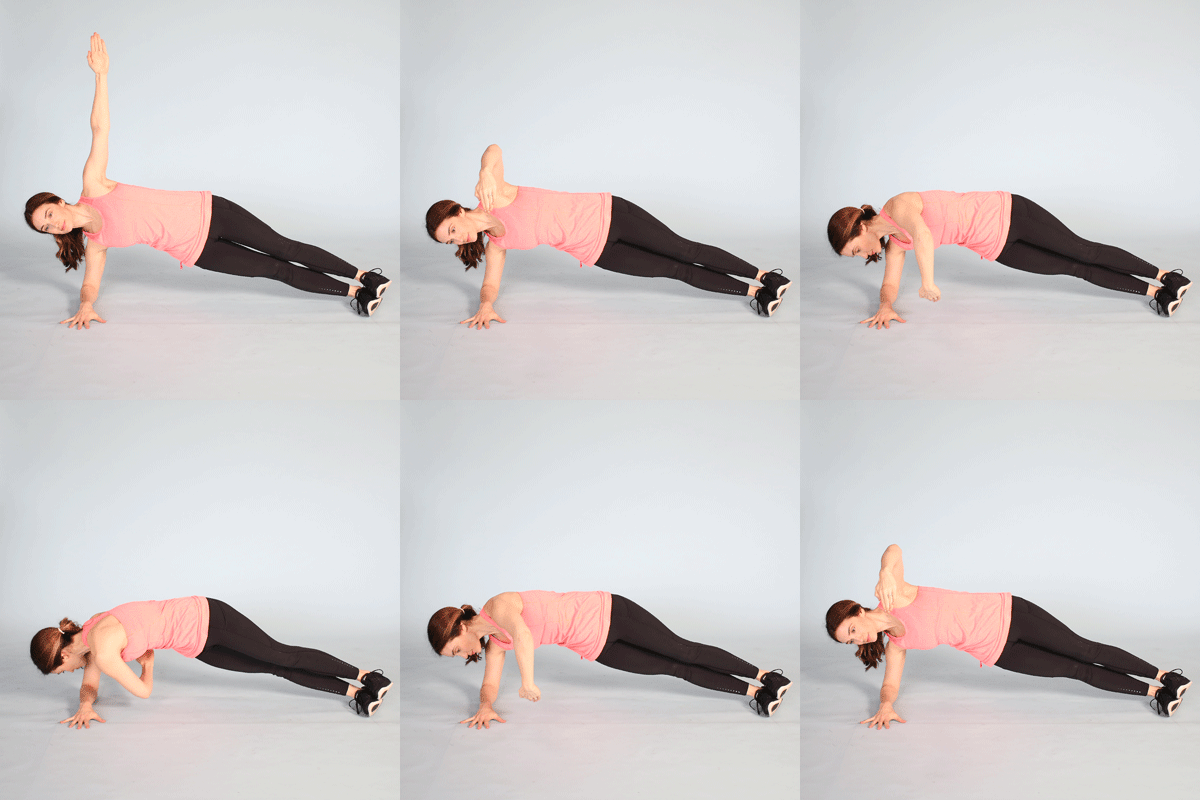
Side plank with trunk rotation
This is an advanced side plank variation that targets the obliques and the muscles around the shoulders while requiring control of trunk rotation. If you are not yet strong enough, perform it with your knees supported or hold a static side plank first.
- Lie on your right side with your right forearm under your shoulder. Extend both legs, placing your left foot on top of your right. Brace your core.
- Lift your hips so your body forms a straight line. Extend your left arm toward the ceiling.
- Rotate your torso toward the floor, threading your left arm underneath your body.
- Rotate back and extend your left arm upward to return to the starting position.
- Start with 1 set of 6–10 repetitions per side.
Turkish get-up
The Turkish get-up is a multistep, full-body movement that requires coordination between the shoulders, hips, legs, and core. It can train whole-body stability across multiple planes of movement, but it is difficult to learn, and you should not rush to use heavy weights (according to acefitness.org).
Practice a few repetitions without weight to learn the sequence. Once you have good control, you can use a light object such as a dumbbell or kettlebell; increase the load only when your shoulder remains stable and your technique does not break down.
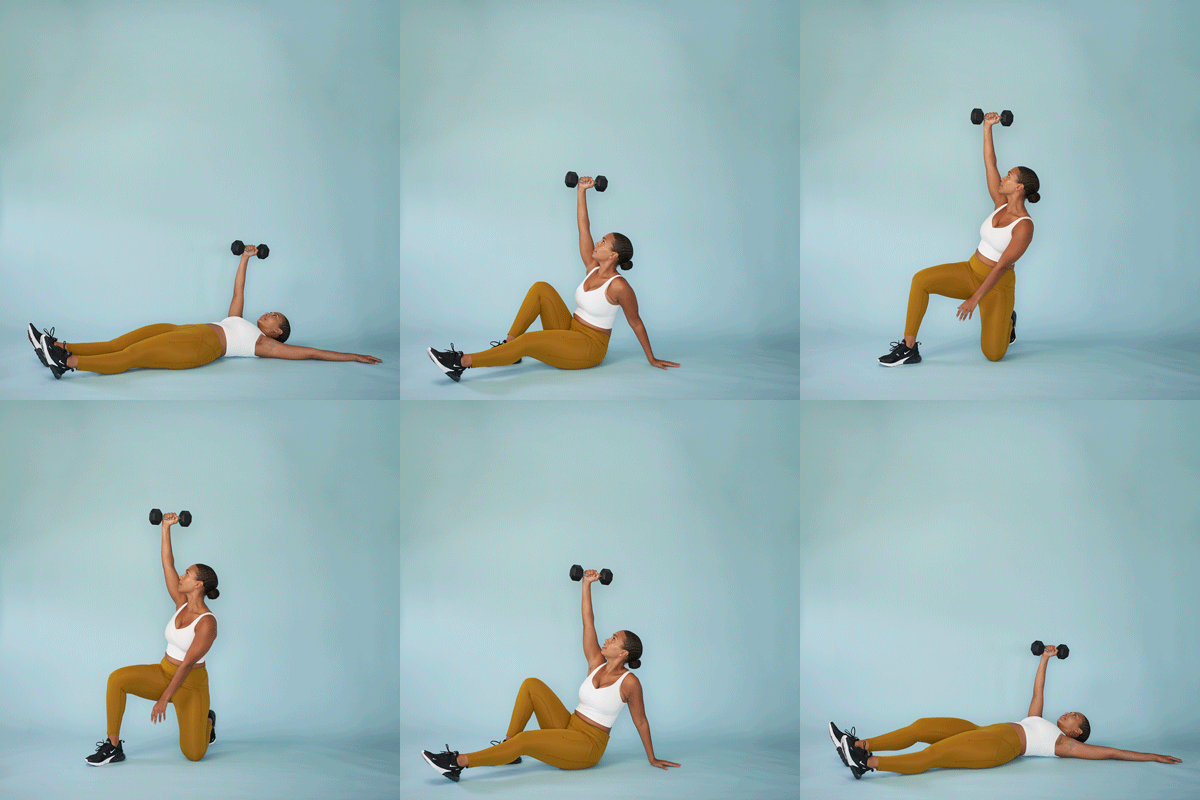
- Lie on your back with your legs extended and your arms positioned at approximately 45 degrees from your torso.
- Bend your right knee and place your right foot on the floor near your buttocks.
- Reach your right arm straight toward the ceiling, making a fist as if holding an object; keep your arm above your shoulder.
- Keep your gaze directed at your hand. Drive through your right heel and press into your left elbow to lift your torso.
- Place your left palm on the floor and transition to a seated position.
- Thread your left leg behind you into a half-kneeling position, keeping your right arm raised.
- Stand up by driving your right foot into the floor and stepping your left foot forward into a lunge.
- Reverse the steps one at a time to return to the lying position.
- Start with 1–3 repetitions per side, using no weight or a very light load.
Summary
An effective core program does not need to focus only on the abdominal muscles. Combine anti-extension exercises such as planks, anti-rotation exercises, and controlled rotational movements such as bird dogs or side planks, along with exercises that train the glutes and hips, such as bridges. Start at an appropriate level, move slowly, and progress gradually while maintaining good form.
If you have an injury, back pain, or another medical condition, consult a healthcare professional before starting a new program. During exercise, stop if you experience sharp pain, numbness, weakness, dizziness, or unusual symptoms; do not try to work through the pain. You can also ask a qualified trainer to check your form and modify the exercises.
Reference source
