






Minimalist skincare routine effectiveness does not depend on the number of skincare products, but on choosing the right products, using them in the right order, and maintaining the routine consistently. For most adults, a sensible foundation is cleansing, moisturizing, and applying sunscreen during the day; at night, you can add a treatment product if your skin truly needs it.
This approach helps reduce the risk of irritation, save money, and more easily identify which products suit you or cause problems. Dermatologists often recommend cleansing gently, then using a treatment product if needed, followed by moisturizer and sunscreen (according to aad.org).
What steps are included in a minimalist skincare routine?
Start with a 3-step skincare routine instead of buying many products at once. These three steps address three basic needs: removing dirt, maintaining the skin’s protective barrier, and limiting the effects of UV rays.
1. Cleanse adequately
In the morning, you can wash your face with water or a gentle cleanser, depending on how oily your skin is and how it feels. In the evening, cleanse to remove sunscreen, sweat, dirt, and makeup. If you wear heavy makeup or use waterproof products, you can remove your makeup first and then use a cleanser.
Prioritize products that do not leave your skin feeling tight or stinging after cleansing. Oily skin still needs gentle cleansing; vigorous scrubbing or washing too many times can make the skin drier, more sensitive, and more uncomfortable. The AAD recommends limiting face washing to no more than twice a day and after heavy sweating (according to aad.org).
2. Moisturize according to your skin’s condition
Moisturizing helps reduce tight, dry sensations and supports the skin in maintaining the water it needs. You should not skip this step just because your skin is oily or acne-prone. Instead, choose a suitable texture and ingredients.
- Oily, congestion-prone skin: choose a lightweight gel or lotion labeled “oil-free” or “non-comedogenic.”
- Dry skin: choose a cream richer in emollients and occlusive ingredients; apply it while the skin is still slightly damp.
- Sensitive skin: prioritize fragrance-free formulas with few ingredients and patch-test them on a small area of skin first.
- Combination skin: apply a thin layer of moisturizer over the entire face, adding more to dry areas if needed.
If your skin is peeling due to treatment, weather, or over-cleansing, prioritize restoring it before adding new active ingredients. For acne-prone skin, a non-comedogenic moisturizer can help reduce dryness and discomfort during treatment (according to aad.org).
3. Apply sunscreen during the day
Sunscreen is the final step in the morning. Look for a broad-spectrum sunscreen with an SPF of 30 or higher that suits your skin type. When outdoors for extended periods, reapply it according to the label directions, especially after swimming or sweating.
If you want to use multifunctional cosmetics, you can choose a moisturizer with sunscreen. However, this product is only suitable if you apply enough and do not need to layer separate moisturizing products. If you frequently spend time outdoors, a dedicated sunscreen is usually easier to control. Sun protection also helps reduce the risk of darkening, brown spots, and UV damage (according to aad.org).
Skincare according to your skin’s condition: what should you add and when?
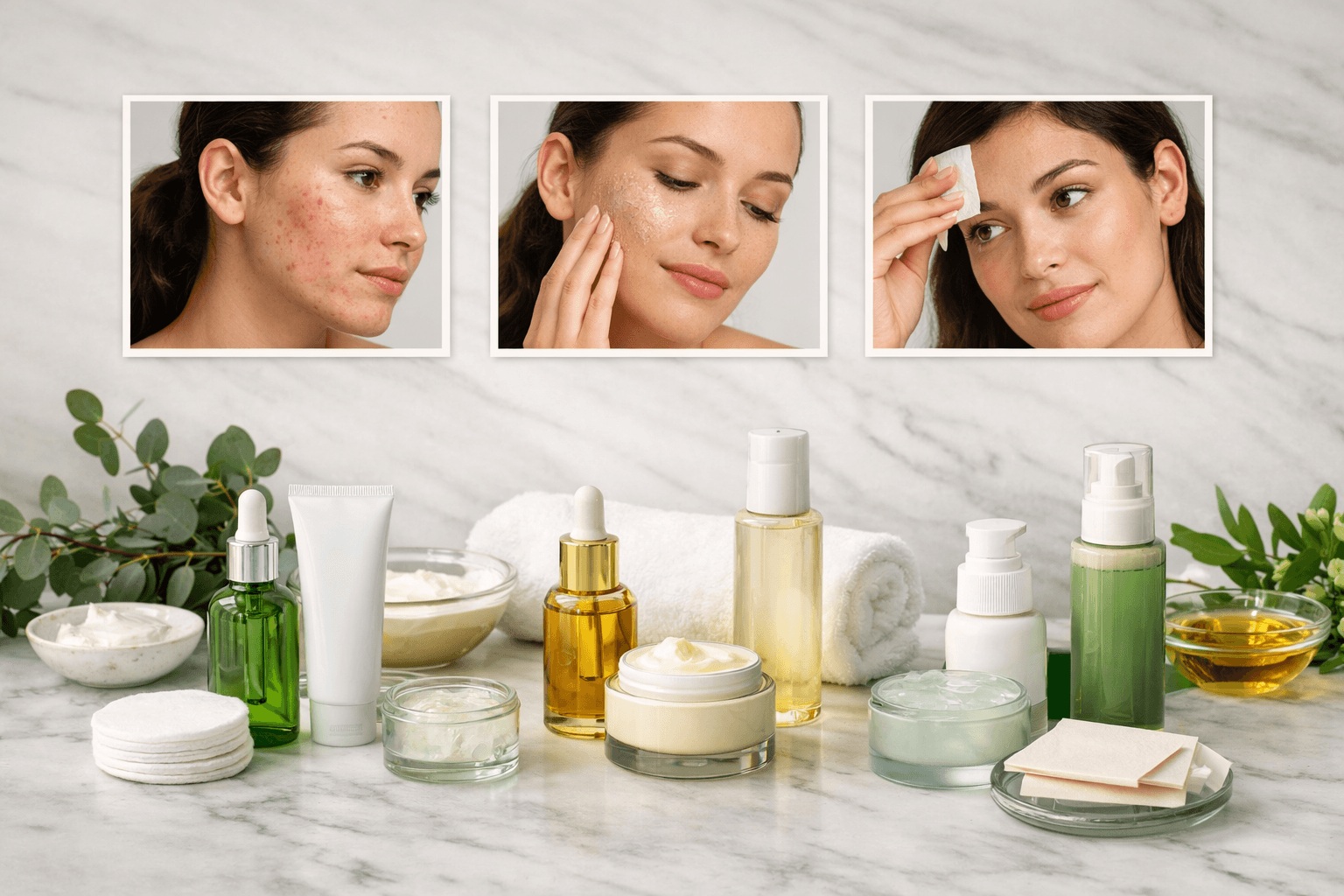
After maintaining the basic routine for two to four weeks, you may consider adding a treatment product. The important rule is to add only one product at a time, use it infrequently, and monitor your skin’s reaction.
| Skin condition | Priority | Minimalist approach | Avoid |
|---|---|---|---|
| Oily skin, easily congested pores | Gentle cleansing and non-comedogenic moisturizer | Add one acne-supporting active ingredient if needed | Washing your face repeatedly and exfoliating too frequently |
| Dry, peeling skin | Restore the skin’s protective barrier | Use a gentle cleanser and a rich moisturizer | Excessive use of acids, drying alcohols, and very hot water |
| Sensitive, redness-prone skin | Formulas with few ingredients and no fragrance | Stabilize your routine before starting treatment | Changing several products at once |
| Inflammatory acne | Gentle cleansing, sun protection, and appropriate treatment | Consult a specialist if the acne is persistent or severe | Popping pimples, scrubbing, and combining multiple active ingredients on your own |
| Dull skin, post-acne dark marks | Consistent sun protection | Choose one pigmentation-supporting product after the skin has stabilized | Expecting rapid whitening while skipping sunscreen |
For example, if you have oily skin but it is currently burning and peeling, the priority is not to increase acids but to cleanse less frequently, use a lightweight moisturizer, and apply sunscreen. Conversely, if your skin is stable but you have persistent blackheads, you may consider a specialized product instead of adding a serum, mask, and exfoliant all at once.
You can also refer to the Beauty Tips section for more related content, but you should compare the ingredients with your skin’s condition before applying anything.
How to implement and check your routine to avoid mistakes
Preparation requirements
- Identify the main concern: dryness, oiliness, acne, sensitivity, or uneven skin tone.
- Buy only one new product for each functional category.
- Read the label, check the expiration date, and patch-test on a small area of skin before applying it to your entire face.
- Record when you started using it and your skin’s reaction for at least a few days.
Morning and evening application order
- Morning: Cleanse gently, moisturize if needed, then apply sunscreen.
- Evening: Remove makeup if you have sunscreen or makeup on, wash your face, apply treatment products if any, then moisturize.
- If a treatment product causes dryness, reduce the frequency instead of forcing yourself to use it daily from the start.
Check the results using three simple signs: your skin does not feel tight or sting after washing, there is no prolonged peeling, and the main concern is becoming more stable. You should not evaluate a routine after only one or two uses. Some concerns may take several weeks before changes become noticeable, while irritation usually appears sooner.
Common mistakes and how to fix them
- Using too many products: Return to the three foundational steps, then add products one at a time.
- Skipping moisturizer for fear of clogging your pores: Switch to a gel texture or a product labeled non-comedogenic.
- Using sunscreen only when it is sunny: Make daytime use a habit, especially when spending time outdoors.
- Changing your routine constantly: Keep it stable long enough to distinguish effective products from potential irritants.
- Treating severe acne yourself: If you have extensive, painful inflammatory acne, scarring, or no improvement, you should see a dermatologist.
Conclusion: Minimalist skincare does not mean overlooking your skin’s needs; it means removing steps that are not yet necessary. Start with gentle cleansing, moisturizing, and sunscreen, then add treatments based on a specific concern. A simple routine maintained consistently is usually more practical than a multi-step regimen that is difficult to follow long term.
If you are building a beauty education website, you can also explore WordPress topics for beginners to choose a suitable platform. For in-depth articles, prioritize checking sources, updating information, and clearly presenting the limitations of each recommendation.
Reference source
