






Traveling in extreme weather is not just about bringing an extra raincoat or sunscreen. You need to check risks at your destination, choose an itinerary that can be changed, prepare a departure plan, and carefully review refund, ticket-change, and insurance terms. The checklist below focuses on three common situations: heat waves, storms, and wildfires.
The most important principle is not to insist on keeping your original itinerary when authorities have issued a dangerous-weather warning. For flights, hotels, or tours, save all notices and communicate in writing so you have evidence when requesting a schedule change or reimbursement.
Safe Travel Checklist Before Departure
Complete the following steps 48 to 72 hours before departure, then check again the evening before you leave:
- Check the hourly forecast: check the temperature, heavy rain, strong winds, air quality, fire warnings, and road conditions at your destination.
- Set a trip-cancellation threshold: for example, do not travel if there is an evacuation order, the road to the airport is closed, there is a flash-flood warning, or air quality has reached a level that puts people with respiratory conditions at risk.
- Choose safe accommodation: prioritize hotels with air conditioning, a generator, clearly marked emergency exits, and a location that is not in a low-lying area, along a river, or next to a fire-prone zone.
- Save alternative routes: download offline maps, record the addresses of the airport, hospitals, and shelters, and identify at least two routes out of the area.
- Prepare for communication: bring a power bank, SIM card or eSIM, local emergency phone numbers, and the contact information of someone in Vietnam.
- Share your itinerary: send your tickets, accommodation address, travel schedule, and insurance information to a family member.
- Check change and cancellation policies: review the policies of the airline, booking platform, tour company, and insurance terms before paying.
If traveling abroad, you should monitor alerts from the embassy, consulate, and local meteorological agency. Emergency alert systems may provide information about natural disasters, airport closures, or evacuation instructions (according to travel.state.gov).
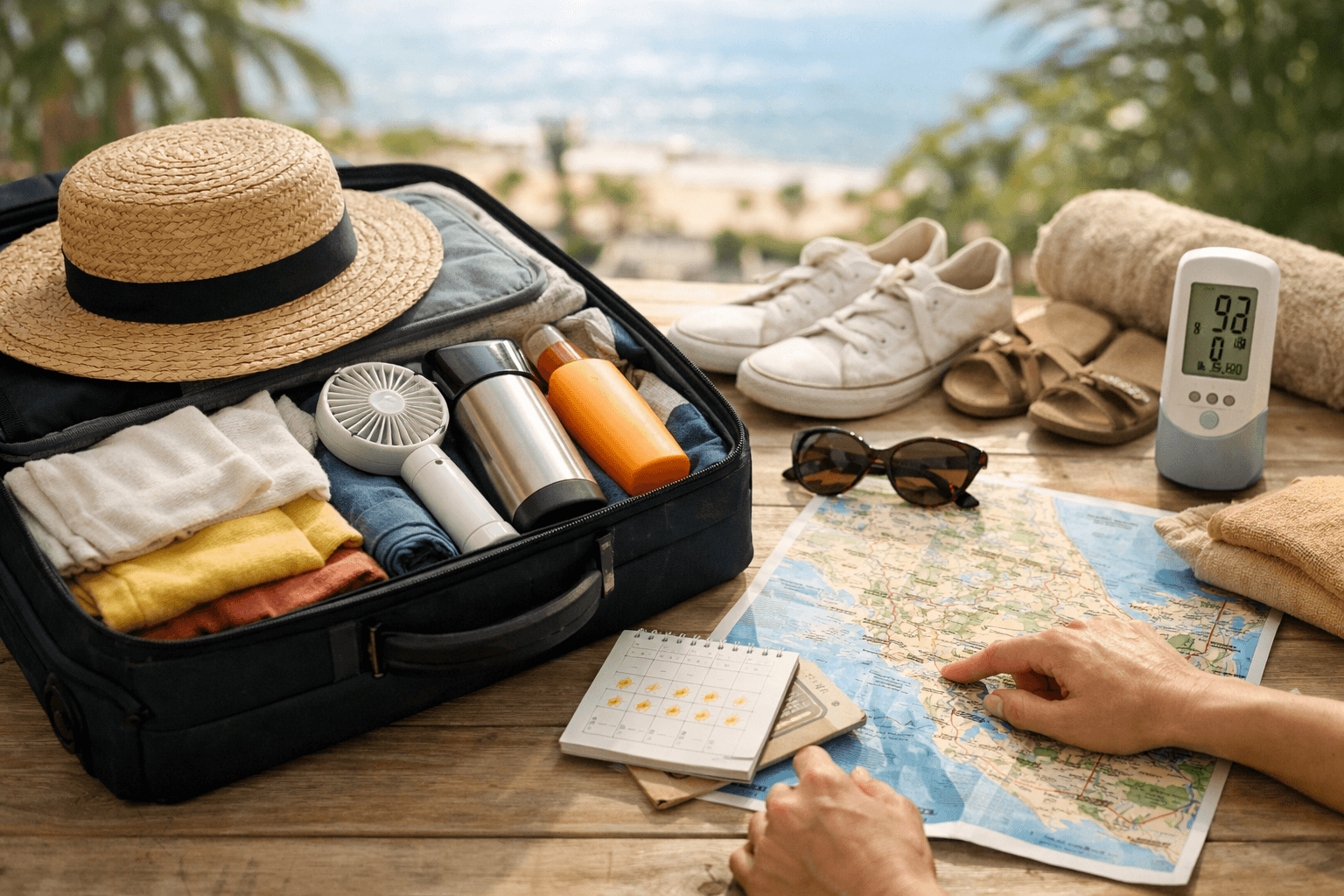
Traveling During Heat Waves: Adjusting Your Itinerary and Packing
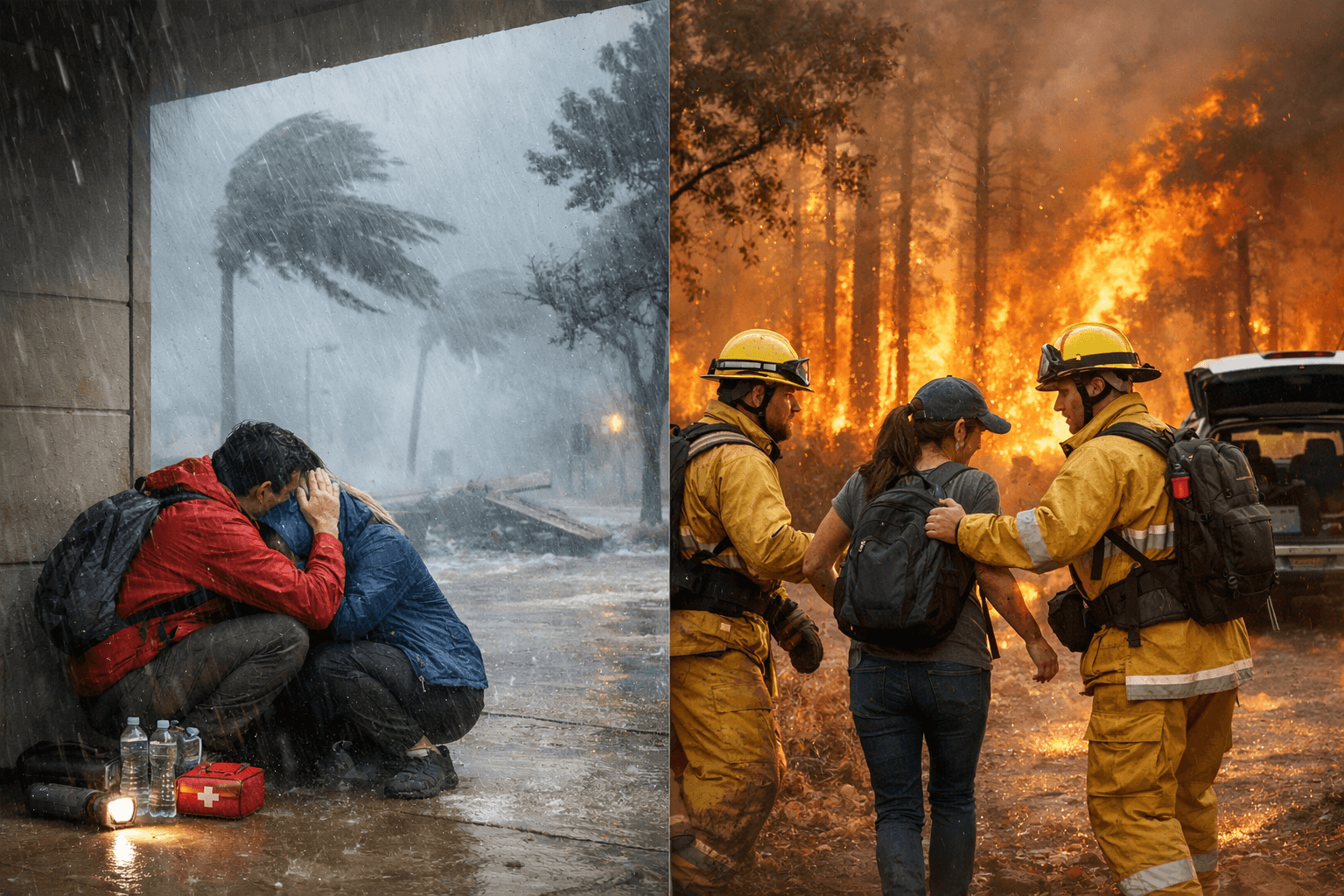
Storms and wildfires have one thing in common: transportation, electricity, water, and air travel conditions can change very quickly. Once at your destination, do not rely solely on social media; prioritize notices from local authorities, airports, carriers, and your accommodation.
During storms, heavy rain, or flooding
- Do not travel through flooded roads, temporary bridges, coastal areas, or routes under a landslide warning.
- Fully charge your phone, and keep your documents and medication in a waterproof bag.
- Ask the hotel about safe floors, emergency exits, and the nearest shelter.
- Do not leave your shelter without authorization when winds are strong or water levels are rising; wait for official instructions.
- If there is an evacuation order, leave early using the designated route; do not wait until the roads are congested.
During a wildfire or heavy smoke
- Check fire maps, air-quality alerts, and road-closure orders.
- Close the windows and limit outdoor activities; people with asthma, COPD, or heart disease, as well as children and older adults, need to take extra precautions.
- If driving in smoke, slow down, turn on your lights, and keep your distance; do not stop where you would obstruct an evacuation route.
- Leave immediately when authorities instruct you to do so. Do not return for luggage if the area has been cordoned off.
Wildfire smoke can reduce visibility and cause breathing difficulties, so a destination that has “not yet burned” may still be unsuitable for travel. If you develop shortness of breath, chest pain, confusion, or blue lips, seek emergency care rather than continuing your journey.
Weather-Related Flight Delays and Travel Insurance for Weather Events
When there is a risk of a weather-related flight delay, follow these steps in order:
- Check the airline’s and airport’s official app or website.
- Do not cancel your ticket yourself before finding out whether the airline is offering rebooking, a refund, or a travel credit.
- Take screenshots of the flight status, warning emails, and airport-closure notices.
- Contact the airline first, then contact the hotel, tour operator, shuttle service, and booking platform.
- If you have to wait, keep receipts for meals, accommodation, and transportation so you can compare them with the applicable policy.
Eligibility for refunds, rebooking, and assistance when a flight is disrupted depends on the country, the contract of carriage, and the specific cause. The International Civil Aviation Organization maintains a database of passenger-protection regulations for individual countries (according to icao.int). Therefore, do not assume that every weather-related cancellation qualifies for a cash refund.
For travel insurance for weather events, read the following sections before purchasing:
- Trip cancellation or interruption due to natural disasters, storms, wildfires, or airport closures.
- Activation conditions: must there be an evacuation order or an official flight cancellation, or is a weather warning sufficient?
- The deductible, coverage limits, and list of exclusions.
- Additional accommodation expenses, ticket changes, alternative transportation, and medical evacuation.
- When to purchase insurance: many policies do not cover events that were known before the policy was purchased.
- 24/7 support hotline and claims-submission procedure.
Travel insurance policies often differ significantly in coverage, duration, covered activities, and medical expenses. You should keep the policy, receipts, trip-cancellation confirmation, and medical records if you need to file a claim (according to travel.state.gov).
| Situation | Immediate action | Itinerary decision |
|---|---|---|
| Prolonged heat | Drink water, find a cool place, and reduce physical activity | Move outdoor activities to early morning or cancel them if symptoms of illness appear |
| Storms, flooding, and strong winds | Monitor shelter-in-place and evacuation orders | Do not travel through dangerous areas; leave early if instructed to do so |
| Wildfires and heavy smoke | Check air quality and routes | Postpone or change destinations if there are health warnings or road closures |
| Flight delayed | Contact the airline and save evidence and receipts | Wait for official arrangements before purchasing a new ticket yourself |
Finally, a safe trip needs a clear “stopping point.” If authorities advise against travel, the hotel cannot guarantee safety, the evacuation route has been closed, or a member of your group develops unusual health symptoms, postpone the trip. Flexibility in your itinerary is usually less costly than dealing with an accident, becoming stranded, or losing the ability to communicate during a disaster.
Reference source
