






Responsible tourism starts with very concrete choices: staying at locally operated accommodations, eating at restaurants that use local ingredients, hiring guides from the area, and respecting the destination’s limits. The goal is not to turn a trip into a test of morality, but to ensure that your spending creates fairer value for the community while reducing pressure on the environment and culture.
International criteria for sustainable tourism often emphasize four elements: destination management, socioeconomic benefits, cultural preservation, and reducing environmental impacts. GSTC also recommends that destinations encourage businesses to support local suppliers, create decent jobs, and maintain residents’ participation in tourism development (according to gstc.org).
Why does tourism benefit local communities?
Every trip creates a chain of spending that includes accommodation, food, transportation, admission tickets, shopping, and experiences. If most services are provided by corporations or outside intermediary platforms, economic value can quickly leave the destination. In contrast, local tourism spending directs revenue to small businesses, craftspeople, farmers, drivers, and service workers.
The benefits also lie in preserving what makes a place special. When residents earn a reasonable income from traditional crafts, cuisine, landscapes, or cultural activities, they have greater motivation to maintain these assets. However, benefits are truly sustainable only when the community participates in decision-making, culture is not turned into a disrespectful performance, and residents do not bear all the costs, such as waste, congestion, or rising housing prices.
The concept of resilient tourism, or tourism with the capacity to withstand disruption, is also directly connected to communities. A destination with many small businesses, diverse livelihoods, and multiple tourism seasons is generally more flexible in the face of extreme weather, economic crises, or transportation disruptions. The United Nations’ International Day of Resilient Tourism highlights tourism’s role in strengthening livelihoods, developing rural areas, and empowering local communities economically (according to un.org).
How to choose destinations and local services
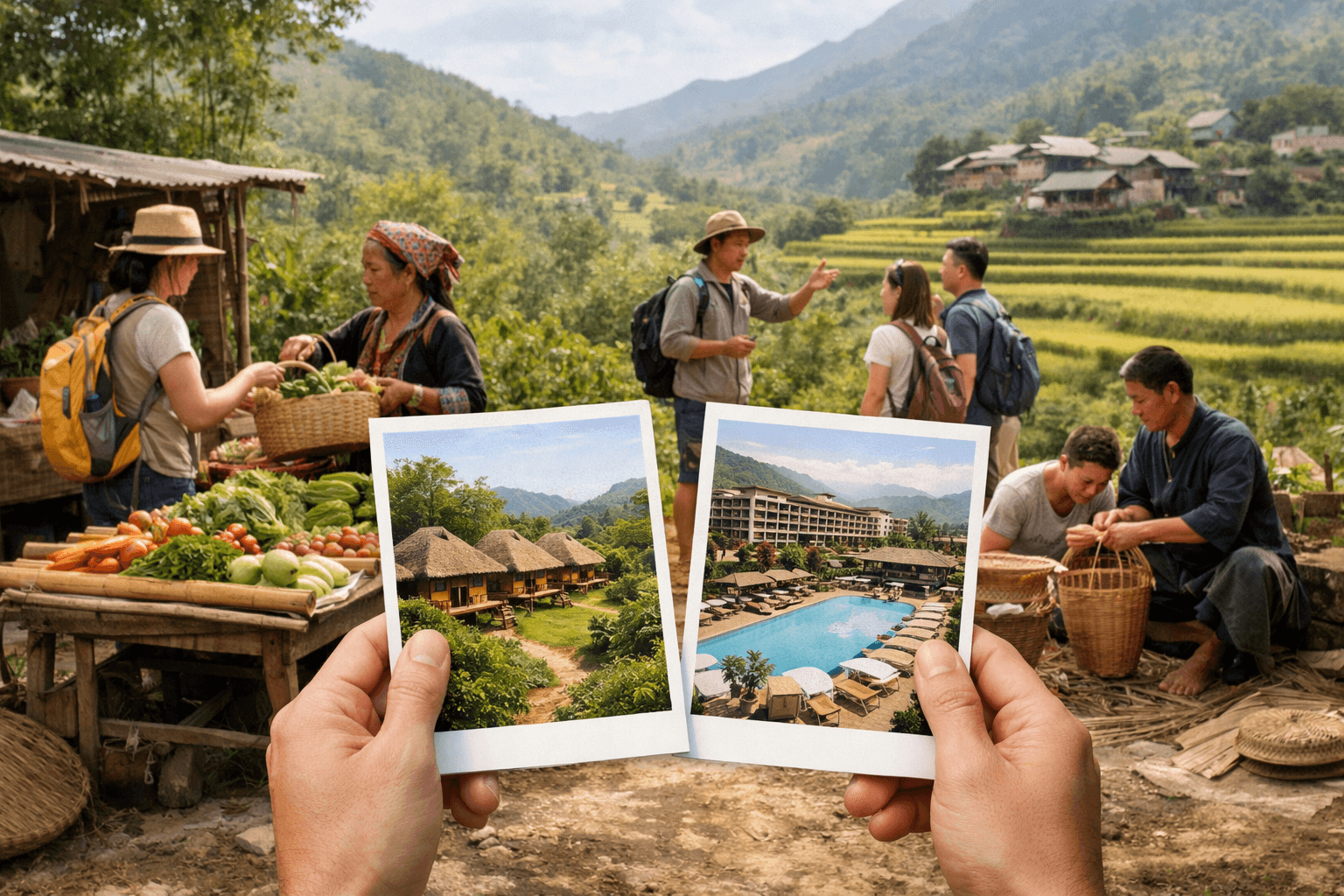
1. Look for signs that the community is genuinely benefiting
- Prioritize homestays, guesthouses, restaurants, and tours owned or staffed by local people.
- Check whether the service publicly provides information about its operators, supply chain, or community-support activities.
- Choose experiences designed and directly led by local residents rather than programs that merely use cultural imagery for advertising.
- For handicrafts, ask about their origins, who made them, and the extent to which local materials were used.
Labels such as “green,” “local,” or “community-based” do not automatically guarantee a positive impact. Look for specific evidence: hiring local workers, purchasing materials locally, making transparent contributions to conservation, or having a mechanism for receiving residents’ feedback. UNESCO also emphasizes the participation of local communities and businesses in tourism planning, development, and management at destinations (according to whc.unesco.org).
2. Allocate your budget instead of simply hunting for the lowest price
The lowest price is not necessarily the most responsible choice. An unusually cheap tour may cut guide wages, use unprotected labor, or pressure suppliers to lower their prices. Build your budget around diversification: set aside one portion for local accommodation, one for eating at family-run restaurants, one for guided experiences, and one for buying products directly from their makers.
You should also pay a fair price, avoid excessive bargaining with small vendors, and not buy products falsely marketed as traditional handicrafts. If there is a conservation fee or an entrance fee for a community-managed area, regard it as part of the cost of maintaining the destination, not as a meaningless extra charge.
3. Choose an appropriate time and way to travel
Traveling in the low season or spreading your itinerary across less crowded areas helps reduce pressure on a few famous sites. At the same time, it expands income opportunities for places that have not benefited much from tourism. Prioritize public transportation, bicycles, walking, or shared transport when safety conditions allow.
If you need an itinerary with fewer stops but deeper experiences, you can consult a guide to slow travel and local experiences. Before trips affected by storms, heatwaves, or wildfires, prepare using a checklist for adapting to extreme weather while traveling.“
2026 sustainable travel checklist for every trip
- Before booking: learn about visitor limits, seasonal weather, cultural regulations, and how the destination manages waste.
- When choosing services: prioritize local businesses, clear labor conditions, and transparent cancellation policies.
- During the trip: carry a refillable water bottle, reduce single-use plastics, do not take natural specimens, and ask permission before photographing local people.
- When shopping: buy directly, ask about product origins, and avoid goods made from wildlife or illegally exploited heritage materials.
- After the trip: leave an honest review, clearly noting strengths and areas for improvement instead of promoting unverified claims.
A common mistake is turning volunteer activities into tourism experiences. Do not show up uninvited at schools, children’s facilities, or residential areas to take photos, distribute gifts, or participate in work without a responsible local organization. Good support must be based on needs identified by the community, include transparent mechanisms, and not violate the dignity of recipients.
Finally, evaluate your trip with a simple set of questions: Who did my money reach, did this experience respect local people, and is the destination better off after I leave? If the answers remain unclear, reduce the scale, choose a more transparent provider, or switch to an experience directly managed by the community.
Reference source
