






Yoga for Older Adults should begin with slow movements, a small range of motion, and support from a chair or wall. The goal is not to stretch as far as possible, but to maintain mobility, balance, and confidence in daily activities. Yoga can combine several components, such as flexibility, strength, and balance, but it does not replace a walking program or medical treatment when you have an underlying condition (according to nia.nih.gov).
What Are the Benefits of Yoga for Older Adults?
Regular practice may help you move your joints more easily, improve postural awareness, and enhance your ability to maintain balance. This is why yoga is often included among activities that help prevent falls, alongside tai chi and strength exercises.
The concept of yoga healthy ageing should be understood as practicing to maintain independence: standing up from a chair more easily, turning more safely, breathing more calmly, and reducing fear of movement. The benefits depend on your health condition, frequency, and the quality of instruction; yoga should not be viewed as a cure for joint pain, osteoporosis, or heart disease.
A Yoga Schedule and Gentle Exercises Based on Your Ability
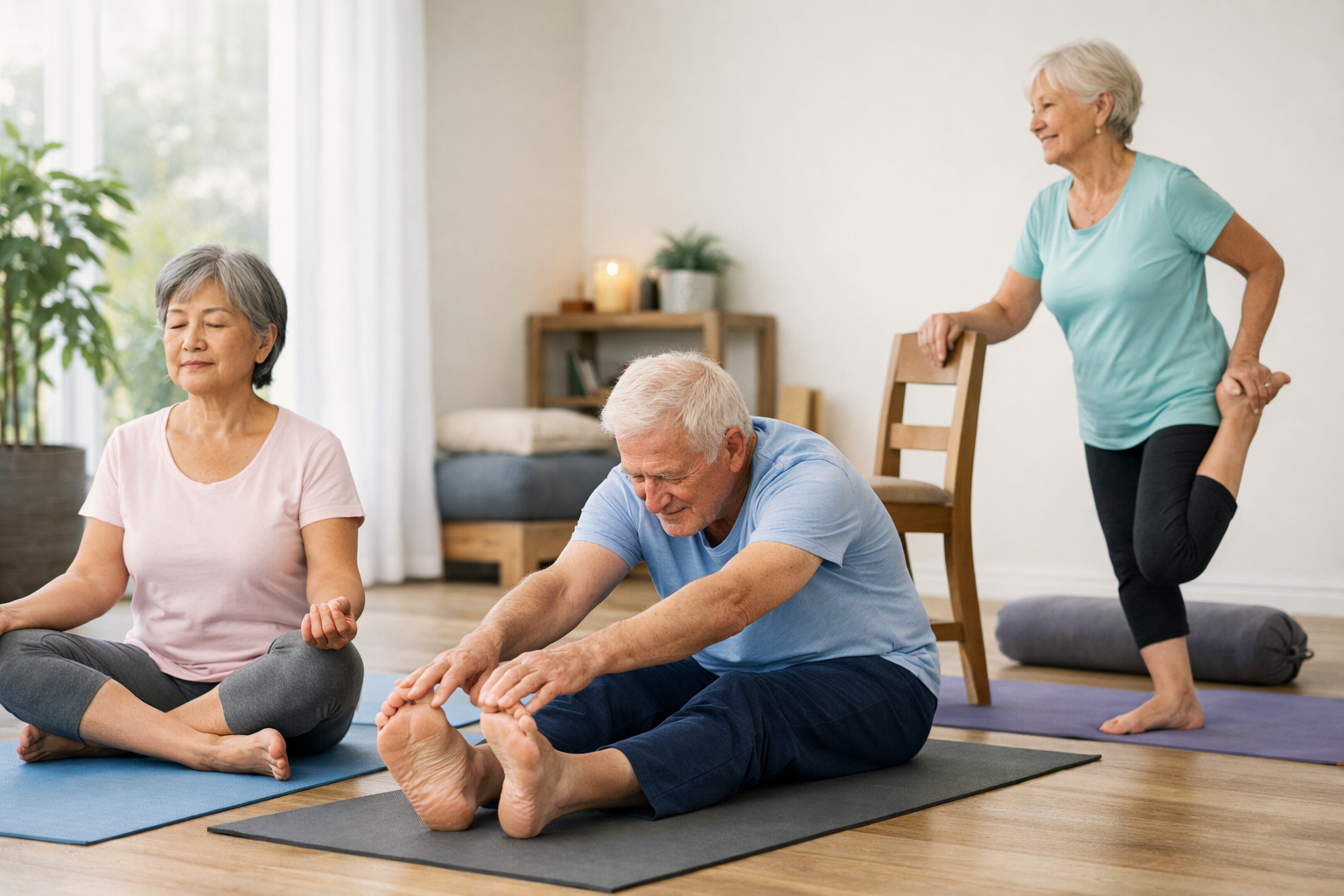

Yoga Safety starts with listening to your body. Stop exercising, sit or lie down to rest, and ask someone for assistance if you experience chest pain, unusual shortness of breath, dizziness, nausea, blurred vision, an irregular heartbeat, sudden weakness, or a feeling that you are about to fall. If the symptoms are severe, persist, or do not improve after resting, contact emergency services or a medical facility.
Mild muscle soreness after a session can occur, but sharp joint pain, pain radiating down an arm or leg, numbness or tingling, swelling, new loss of balance, or gradually worsening pain should not be ignored. Do not continue just because the class is still in progress. Note the movement that caused discomfort so you can discuss it with an instructor or healthcare professional.
A common mistake is using videos with a pace that is too fast, trying to imitate younger people, holding your breath while maintaining a pose, or standing up too quickly. Slow down, use a chair, rest between movements, and transition between positions by rolling onto your side if necessary. If you frequently feel dizzy when changing positions, you should be evaluated to determine the cause before increasing your exercise duration; standing up slowly can also help reduce the risk of losing your balance (according to nia.nih.gov).
After 2–4 weeks, you can assess your progress using practical signs: standing up from a chair more easily, walking more steadily, experiencing less morning joint stiffness, and recovering more quickly after exercise. If pain increases, fatigue persists, or your fear of falling becomes greater, reduce the intensity and find an instructor experienced in working with older adults.
If you track your activity with a smartwatch, use the data to identify trends and when to rest, rather than self-diagnosing a condition from your heart rate or a single metric. Also see how to use wearable data properly to avoid overinterpreting it.
Reference source
