






If your Blogger blog uses a custom theme, check for and restore the Blogger Report Abuse button in the footer, sidebar, or navigation menu. The safest approach is to add the default Report Abuse widget from the Layout section. If the widget does not appear, you can add a direct link to https://www.blogger.com/go/report-abuse. Blogger recommends maintaining this mechanism so readers can report inappropriate or potentially illegal content (see Blogger Help).
Why does a custom blog need a Blogger Report Abuse button?
When you change the theme, remove the default footer, or use a template downloaded from an external source, the reporting button may be removed without any clear warning. Readers then have no direct way to report copyright infringement, scams, impersonation, malware distribution, or other illegal content.
In its official support documentation, Google calls this feature Report Abuse and states that the button may appear in the footer, sidebar, or menu, depending on the template. Blogger also allows this default mechanism to be used when you are building a blog with a custom theme (see Google Blogger Help).
A reporting link does not mean that a blog is “DSA-compliant by certification.” It is one step in implementing a notice-submission mechanism. Article 16 of the Digital Services Act requires notice mechanisms for allegedly illegal content to be accessible, user-friendly, and capable of receiving submissions electronically (see EUR-Lex).
How to Add the Report Abuse Widget to Blogger
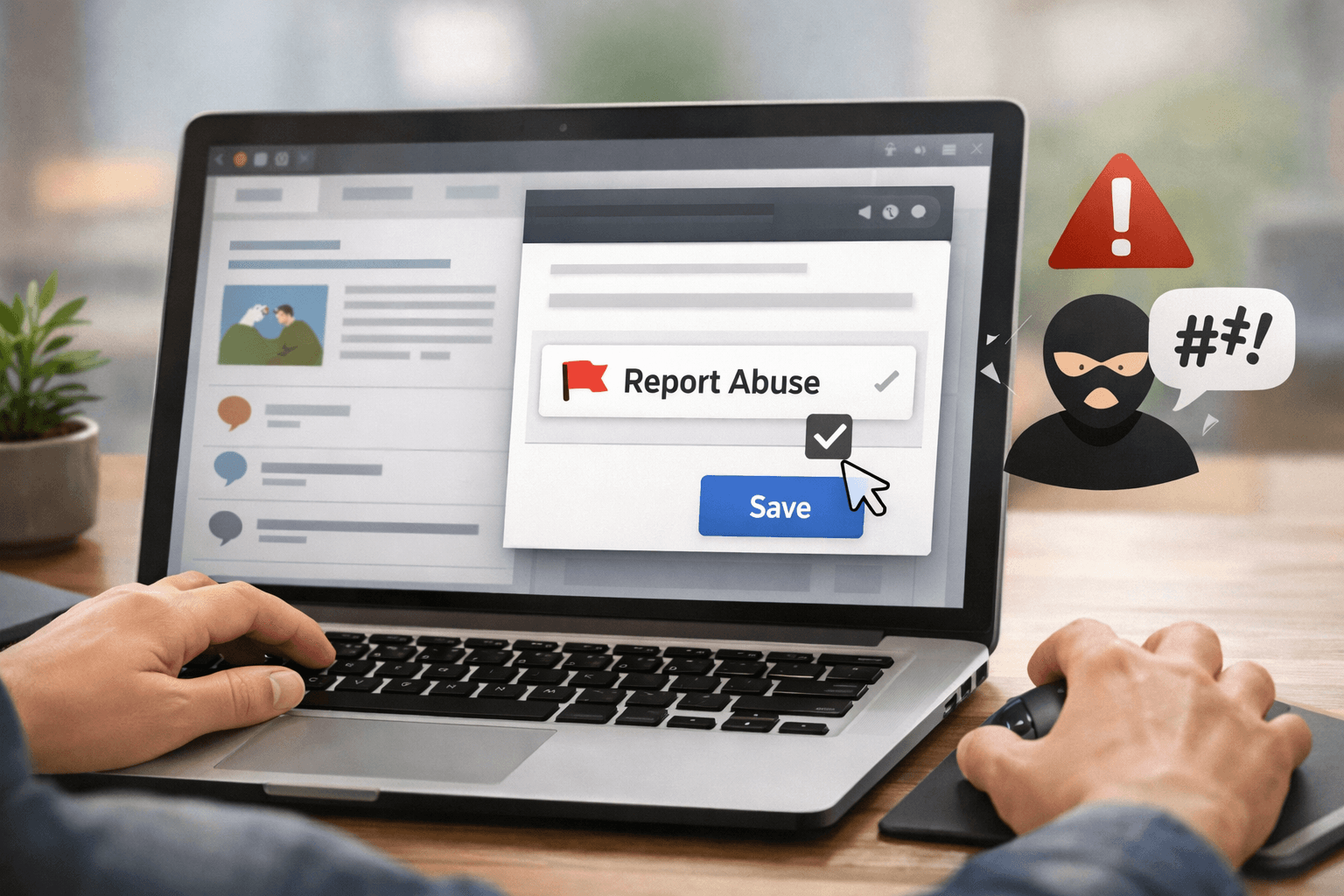
Method 1: Add the Widget from the Layout Section
- Sign in to Blogger and select the blog you want to edit.
- Open Layout in the dashboard.
- Find the Footer, Sidebar or an appropriate menu location, then select Add a Gadget.
- Find the gadget named Report Abuse or Report Abuse. The displayed name may vary depending on your account language.
- Save the layout, open the blog as a visitor, and click the button to test it.
Placing the button in the footer is usually the easiest option to manage because it appears consistently across multiple pages. Do not place the link only in a single post, since readers may discover reportable content from another page.
If your blog also receives a large volume of spam comments, combine the reporting button with Blogger comment moderation settings to reduce unwanted content before publication.
Method 2: Add a Direct Link in a Custom Theme
When the widget is not listed or the template does not support the desired location, open the theme’s HTML editor and add a link to the footer or menu. Minimal example:
<a href="https://www.blogger.com/go/report-abuse" rel="nofollow">Báo cáo nội dung không phù hợp</a>You can open the link in a new tab by adding target="_blank", but this is optional. If you use this attribute, you should also add rel="nofollow noopener" to limit unnecessary tab-opening behavior and avoid risks associated with windows opened from another page.
For themes with multiple language versions, use a clear label such as “Report inappropriate content” instead of simply “Report Abuse.” The goal is to ensure that readers recognize the function even if they are unfamiliar with the English term.
Test the Reporting Button and Avoid Customization Errors
Post-implementation checklist
- Open the blog in a private browsing window or while signed out.
- Check the button on the homepage, a post page, and a mobile screen.
- Click the link and confirm that it leads to Blogger’s official reporting page.
- Check the text color, contrast, and size of the clickable area.
- Make sure the button is not obscured by an ad layer, pop-up, or CSS.
If you use a custom domain, check HTTPS before publishing the changes. A certificate or Certification Authority Authorization (CAA) configuration error may prevent readers from opening the report page even when the link in the template is correct. You can also see how to enable HTTPS for a custom-domain Blogger blog to review this part.
Common Issues and Fixes
- Widget not found: switch to adding a direct link in the HTML template.
- Button appears only on the homepage: place the code in the shared footer area rather than in the content of an individual post.
- Link redirects to an error page: check the URL for typos and use the correct address
blogger.com/go/report-abuse. - Button is difficult to see: adjust the CSS to improve contrast, spacing, and the size of the clickable area.
The reporting mechanism only handles the receipt of reports; it does not replace your contact page, privacy policy, or content-moderation process. If the blog has multiple authors, assign appropriate permissions and publish suitable information about the responsible person. Creating an author page for the blog also helps readers clearly identify the content source and how to get in touch.
Finally, save a copy of the template before editing the HTML. If a change causes display problems, restore the previous copy and try again using the default widget. You can find more related guides in the Blogger Tutorials section.
Reference source
