

Close Menu
  • Home
  • Life style
    • Celebrities
    • Exercise & Training
    • Healthline
  • Exploration
    • Beauty tips
    • Business
    • Travel guides
    • Fashion
    • Technology
  • Web tutorials
    • Hosting & Servers
    • Blogger guides
    • WordPress guides
  • English
    • Tiếng Việt
    • Hmoob
    • English
Facebook YouTube X (Twitter) Instagram
Trending
  • Protecting Servers Against AI Attacks: From Identity to the Supply Chain
  • Late-Summer Travel in Vietnam 2026: Plan a Less Crowded, Less Rainy Itinerary
  • Protecting WordPress Against AI Bots and Unknown Crawlers
  • Install Let’s Encrypt SSL on Ubuntu with OpenLiteSpeed and Automatic Renewal
  • AI-Powered Operational Optimization for Small Businesses: A 30-Day Testing Framework
  • Optimizing a Blog for Google AI Overviews and AI Mode
  • Diagnosis and Treatment of Severe Pneumonia: CAP, HAP, VAP, and Aspiration Pneumonia
  • How to Build a Newsletter for Your Blog: WordPress, Substack, or an Email Platform?
Facebook YouTube X (Twitter) Instagram
SaibABCSaibABC
Chú thích cho quảng cáo
  • Home
  • Life style
    1. Celebrities
    2. Exercise & Training
    3. Healthline
    4. View All

    Comparing Lionel Messi and Cristiano Ronaldo: Their Complete Careers

    30/08/2026

    Celebrities Move to Video Podcasts: The New Era of Talk Shows

    30/08/2026

    Taylor Swift Protects Her Voice Against AI: The Fight Against Deepfakes

    30/08/2026

    15 Most Popular Celebrities in the World of All Time

    30/08/2026

    Five-Minute Office Exercises: A Snack-Sized Movement Schedule

    30/08/2026

    Best Exercises to Strengthen Your Core: From Beginner to Advanced

    30/08/2026

    Diagnosis and Treatment of Severe Pneumonia: CAP, HAP, VAP, and Aspiration Pneumonia

    30/08/2026

    Preventing Dengue at Home: A Mosquito Control and Severe Symptom Checklist

    30/08/2026

    Self-Directed Health with Wearables: Use Data Correctly, Do Not Self-Diagnose

    30/08/2026

    Empowering Health: Prioritize Early Cancer Screenings for Better Well-being

    30/08/2026

    Diagnosis and Treatment of Severe Pneumonia: CAP, HAP, VAP, and Aspiration Pneumonia

    30/08/2026

    Preventing Dengue at Home: A Mosquito Control and Severe Symptom Checklist

    30/08/2026

    Preparing for the Business Peak Season: Capacity, Staffing, and Cash Flow Spreadsheet

    30/08/2026

    Comparing Lionel Messi and Cristiano Ronaldo: Their Complete Careers

    30/08/2026
  • Exploration
    1. Beauty tips
    2. Business
    3. Travel guides
    4. Fashion
    5. Technology
    Featured

    Late-Summer Travel in Vietnam 2026: Plan a Less Crowded, Less Rainy Itinerary

    By Nuj Coom30/08/2026
    Recent

    Late-Summer Travel in Vietnam 2026: Plan a Less Crowded, Less Rainy Itinerary

    30/08/2026

    AI-Powered Operational Optimization for Small Businesses: A 30-Day Testing Framework

    30/08/2026

    How to Block OTA Updates on iPhone and iPad Using Block OTA

    30/08/2026
  • Web tutorials
    1. Hosting & Servers
    2. Blogger guides
    3. WordPress guides
    4. View All

    Protecting Servers Against AI Attacks: From Identity to the Supply Chain

    30/08/2026

    Install Let’s Encrypt SSL on Ubuntu with OpenLiteSpeed and Automatic Renewal

    30/08/2026

    How to Install the LAMP Stack: Linux, Apache, MySQL, and PHP on Ubuntu

    30/08/2026

    How to secure Apache with Let’s Encrypt on Ubuntu

    30/08/2026

    Optimizing a Blog for Google AI Overviews and AI Mode

    30/08/2026

    Repurposing Blog Content: Turn One Article into 5 Formats

    30/08/2026

    12 Best AI Content Writing Tools for Bloggers in 2026

    30/08/2026

    How to Get Your Blog Into Google Discover After the Google Discover Core Update 2026

    30/08/2026

    Protecting WordPress Against AI Bots and Unknown Crawlers

    30/08/2026

    How to Install the LAMP Stack: Linux, Apache, MySQL, and PHP on Ubuntu

    30/08/2026

    12 Best AI Content Writing Tools for Bloggers in 2026

    30/08/2026

    Check WordPress Plugins Before Updating: A 24-Hour Process

    30/08/2026

    Protecting Servers Against AI Attacks: From Identity to the Supply Chain

    30/08/2026

    Protecting WordPress Against AI Bots and Unknown Crawlers

    30/08/2026

    Install Let’s Encrypt SSL on Ubuntu with OpenLiteSpeed and Automatic Renewal

    30/08/2026

    Optimizing a Blog for Google AI Overviews and AI Mode

    30/08/2026
  • English
    • Tiếng Việt
    • Hmoob
    • English
SaibABCSaibABC
Home»Web tutorials»Hosting & Servers»What Is LAMP Stack? Discover the Power of LAMP Stack
Hosting & Servers 5 Mins ReadNo Comments

What Is LAMP Stack? Discover the Power of LAMP Stack

Nuj CoomBy Nuj Coom
Facebook Twitter Pinterest LinkedIn Tumblr Email
Chú thích cho quảng cáo

Contents

  1. What is the LAMP Stack?
  2. Why is the LAMP Stack important?
  3. What is the LAMP Stack used for?
  4. What is LAMP architecture?
  5. How does the LAMP Stack work?
  6. Alternatives to the LAMP Stack
  7. What is the MEAN Stack?
  8. Comparing MEAN Stack with LAMP Stack
  9. References

What is the LAMP Stack?

The LAMP Stack is a collection of four open-source technologies—Linux, Apache, MySQL, and PHP—commonly used to build, deploy, and operate websites or web applications. These components have different roles but work together to process requests from the browser to the server. PHP is currently the server-side programming language in the LAMP model; according to the official documentation, PHP can be embedded in HTML to create dynamic content (according to PHP.net).

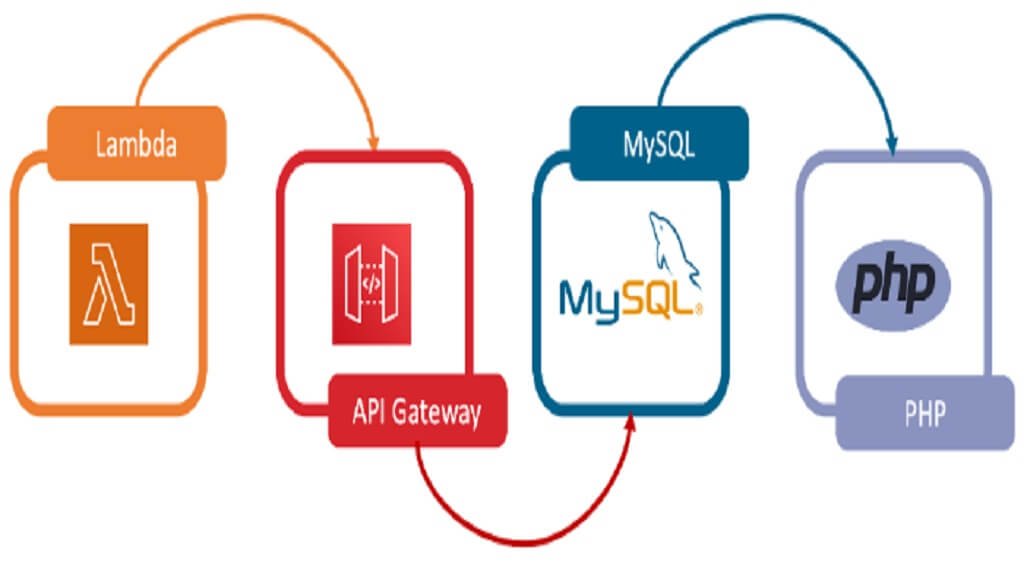
The LAMP Stack consists of Linux, Apache, MySQL, and PHP
What is the LAMP Stack and how does it work?

Why is the LAMP Stack important?

Developers choose the LAMP Stack for the following reasons:

  1. Cost: All core components of the LAMP Stack are open-source software, which helps reduce or eliminate licensing costs. However, a project may still incur costs for servers, domain names, support services, and operations.
  2. Efficiency: This model has been widely used for many websites and web applications. Its layered structure separates the operating system, web server, database, and application code, making development and administration more convenient.
  3. Maintenance: Open-source projects offer extensive documentation, updates, and community support. Nevertheless, administrators still need to proactively update the components, especially PHP and the operating system, because end-of-life versions may no longer receive security patches (according to PHP Supported Versions).
  4. Support: The LAMP Stack has a rich ecosystem of documentation, forums, libraries, and tools, making it easier to find solutions to problems or implement features.
  5. Flexibility: LAMP is the name of a popular model, not a mandatory standard for every project. Depending on their needs, developers can replace PHP with another language or MySQL with a compatible database management system.

What is the LAMP Stack used for?

The LAMP Stack primarily supports server-side development, including data processing, database management, business logic execution, and API creation for applications. This model can serve both static and dynamic content.

  1. Static websites: HTML, CSS, JavaScript, and resource files are distributed directly by Apache. The content generally does not change for each user unless additional server-side processing is implemented.
  2. Dynamic websites: PHP processes server-side code, reads or writes data to MySQL, and then generates an HTML response appropriate to the user's request.

What is LAMP architecture?

LAMP architecture is a layered model consisting of four components that work together to build and run web applications:

  1. Linux: The underlying operating system, providing the environment for installing and running the web server, PHP, and database management system.
  2. Apache: The web server that accepts HTTP/HTTPS connections, distributes static files, and forwards requests requiring processing to the application. Apache supports many modules and configurable connection-processing models (according to Apache HTTP Server Documentation).
  3. MySQL: A relational database management system used to store, organize, and query data using SQL. Data is arranged in related tables (according to MySQL Reference Manual).
  4. PHP: A server-side programming language used to process logic, work with databases, and generate dynamic HTML content before sending a response to the browser. In production, it is advisable to use a supported PHP branch.

How does the LAMP Stack work?

The process for handling a web request in the LAMP Stack typically proceeds as follows:

Chú thích cho quảng cáo
  1. Receiving the request: Apache receives the request from the browser. If it is a static file, Apache can return the content directly; if it is a dynamic request, Apache forwards it to PHP code or the configured PHP integration mechanism.
  2. Processing the request: PHP executes the application code, validates input data, and may send queries to MySQL to read, add, modify, or delete data.
  3. Generating the response: PHP generates HTML, JSON data, or an appropriate API result. Apache then sends the response to the browser or client application.
  4. Displaying the result: The browser interprets HTML, CSS, and JavaScript to display the page to the user. For an API, the client application processes the received data itself.

Alternatives to the LAMP Stack

The LAMP Stack can be modified by changing the web server, operating system, database, or server-side programming language. Commonly mentioned models include WAMP (Windows, Apache, MySQL, PHP), MAMP (macOS, Apache, MySQL, PHP), LEMP (Linux, Nginx, MySQL or MariaDB, PHP), and MEAN. The choice depends on the operating system requirements, performance, team skills, and project ecosystem.

Some languages that can replace PHP:

  1. Perl: A long-established language that was once widely used in web development and may still be suitable for systems or projects that need to maintain Perl code.
  2. Python: A general-purpose language commonly used with web frameworks such as Django or Flask, suitable when the team already has a Python background.
  3. JavaScript/TypeScript: Can be used on the server side through Node.js, allowing teams to use the same JavaScript or TypeScript ecosystem across multiple application layers.

What is the MEAN Stack?

MEAN Stack is a web development model consisting of MongoDB, Express.js, Angular, and Node.js. Unlike LAMP, MEAN uses JavaScript as the primary language across multiple layers of the application:

  1. MongoDB: A document-oriented NoSQL database management system that typically stores data in a JSON-like document format.
  2. Express.js: A minimalist framework for web applications and APIs running on Node.js.
  3. Angular: A client-side framework used to build user interfaces and web applications.
  4. Node.js: A server-side JavaScript runtime environment that enables the development of web services and APIs with JavaScript.

Comparing MEAN Stack with LAMP Stack

MEAN and LAMP are suitable for different contexts. MEAN can be convenient when a team wants to use JavaScript for both the frontend and backend while building highly interactive interfaces. LAMP is suitable for web applications that require PHP, SQL, and a mature server ecosystem, such as content websites, management systems, or online stores. There is no universally better choice; consider functional requirements, team skills, scalability, deployment tools, and operating costs before making a decision.

References

  • PHP.net – PHP Overview
  • PHP.net – Supported PHP Versions
  • Apache HTTP Server – Module Documentation
  • MySQL Reference Manual – What Is MySQL?

Chú thích cho quảng cáo
Apache LAMP Stack Linux MEAN Stack MySQL PHP Web Development
Share. Facebook Twitter Pinterest LinkedIn Tumblr Email
Previous ArticleHosting for AI Websites: Calculating Infrastructure Costs Correctly
Next Article How to Block OTA Updates on iPhone and iPad Using Block OTA
Nuj Coom
  • Website
  • Facebook
  • X (Twitter)
  • Instagram

Related Posts

Protecting Servers Against AI Attacks: From Identity to the Supply Chain

30/08/2026

Install Let’s Encrypt SSL on Ubuntu with OpenLiteSpeed and Automatic Renewal

30/08/2026

How to Install the LAMP Stack: Linux, Apache, MySQL, and PHP on Ubuntu

30/08/2026
Add A Comment
Leave A Reply Cancel Reply

Latest posts

Preventing Dengue at Home: A Mosquito Control and Severe Symptom Checklist

Preparing for the Business Peak Season: Capacity, Staffing, and Cash Flow Spreadsheet

How Tourism Benefits Local Communities: How to Choose Responsible Destinations

Celebrities Move to Video Podcasts: The New Era of Talk Shows

Slow Travel with Local Experiences: Planning an Itinerary with Fewer Stops but Richer Experiences

Advertisement
Chú thích cho quảng cáo

SUBSCRIBE TO UPDATES

Get the latest creative news from SaibABC.Com on web tips, design, and business.

Copyright © 2024. Designed by NujCoom.
  • Home
  • Contact
  • Privacy
  • Tiếng Việt
  • Hmoob

Type above and press Enter to search. Press Esc to cancel.