






The short answer: Children often get substantial amounts of sodium from salty snacks, pizza, sandwiches with deli meat, soups, noodles or mixed dishes, bread, cheese and processed poultry. So simply taking the salt shaker off the table is not enough: sodium may already be present in packaged foods, restaurant meals and prepared dishes.
This article is intended for families with children aged 1 and older who want to identify sources of sodium, read food labels and gradually adjust their meals. The examples of food groups and labeling terms are based primarily on U.S. data and guidance, so they cannot be applied unchanged to every product in Vietnam.
NHANES data from 2021–2023 show that the eight food groups contributing the most sodium to the diets of people aged 1 and older were deli-meat sandwiches, pizza, salty snacks, soups, poultry, mixed noodle dishes, bread and cheese. Among children aged 1–11, salty snacks were the largest contributing group, accounting for about 8% of the total sodium intake in the reported data. These are U.S. data, but they can still help families identify the types of foods to check first (according to cdc.gov).
How much sodium should children limit each day?
Sodium is needed for fluid balance, nerve function and muscle contraction. However, consuming too much sodium is associated with high blood pressure, and salty eating habits can develop early in life. The benchmarks below are reference limits from U.S. dietary guidance, not targets for children to try to reach:
| Age | Reference daily sodium limit |
|---|---|
| 1–3 years | 1,200 mg |
| 4–8 years | 1,500 mg |
| 9–13 years | 1,800 mg |
| Age 14 and older, including adults | 2,300 mg |
The practical goal is to keep total sodium intake as low as reasonably possible within a varied diet, while still ensuring adequate energy and nutrients. For children aged 2–15, the WHO recommends adjusting the adult reference level downward according to the child’s energy needs; younger children should be assessed in the context of complementary feeding and professional guidance (according to who.int).
Children under 1, children with kidney disease, heart disease or high blood pressure, and children following a therapeutic diet should not apply a fixed number on their own. Parents should ask a doctor or dietitian about the child’s individual target.
Foods that commonly raise children’s dietary sodium intake
Salty snacks
French fries, snack chips, salted crackers, seasoned popcorn and some roasted salted nuts may be eaten several times a day. Even a small package may contain multiple servings, while children often eat directly from the package, making it difficult to know how much they have consumed.
What to do: Portion the food into a bowl instead of giving the child the entire package; compare products by milligrams of sodium per serving or per equivalent weight; and choose fruit, unsweetened yogurt, cut-up vegetables or unsalted nuts more often for snacks.
Pizza, sandwiches and fast food
Sodium may come simultaneously from the crust or bread, cheese, deli meat, sauces and processed meat. A food that appears to contain “just bread and meat” may still contain several cumulative sources of sodium.
Ways to reduce it: Choose a smaller portion, reduce the amount of deli meat and added cheese, use less sauce, and serve the meal with unsalted vegetables or fruit. These foods do not necessarily need to be prohibited completely; consider their frequency, portion size and the other foods eaten that day.
Canned soup, instant noodles and mixed dishes
Broth, seasoning packets, soy sauce, oyster sauce, chili sauce, bouillon cubes and other sauces can quickly increase sodium. With instant noodles, the seasoning packet is often a notable source. Discarding some of the broth may reduce part of the sodium, but it will not remove all the sodium absorbed into the noodles.
Ways to reduce it: Use only part of the seasoning packet and add vegetables plus eggs or unseasoned meat. For canned soup, you can choose a product labeled “low sodium” if one is available and dilute it according to the instructions, but you still need to check the sodium amount on the label; this phrase does not replace checking the actual number.
Bread, cheese and processed poultry
Bread may not taste particularly salty, but because it is eaten frequently, its cumulative sodium contribution can be significant. Cheese, sausages, deli meat, meatballs, breaded chicken and pre-seasoned poultry may also contribute more sodium than fresh, unseasoned meat.
Ways to reduce it: Rotate lower-sodium breads, home-cooked fresh meat, eggs, beans and fish; use cheese as a small component rather than the main protein source. Read the labels even on products marketed “for children,” because child-friendly imagery does not mean low sodium.
How to read the Nutrition Facts label to calculate sodium correctly
1. Check the serving size and number of servings per package
Sodium information is usually given for one serving, not necessarily for the entire package. If a child eats two servings, the sodium amount also doubles. Hypothetical example: a package lists 180 mg of sodium per serving and contains 3 servings; if the child eats the entire package, the total is:
180 mg × 3 = 540 mg natriBefore calculating, record how many servings the child actually eats. If a product label in Vietnam lists sodium only per 100 g or per another amount, convert it based on the weight the child ate rather than mechanically applying the per-serving figure.
2. Look at milligrams first, then use %DV for comparison
The milligram figure shows the amount of sodium in the serving listed on the label. %DV (percent Daily Value) helps you quickly compare products that use the same labeling system. According to the FDA, 5% DV or less is considered low, while 20% DV or more is high; parents still need to multiply the amount by the number of servings the child eats (according to FDA).
Not every country’s food labels use %DV in the same way as the FDA. When this information is unavailable, prioritize the sodium amount in milligrams and compare products in the same category by the same weight or serving size.
3. Compare products in the same category
Place two products side by side and compare their sodium content using the same weight or serving size. Do not rely only on words such as “natural,” “premium” or “for children,” or on packaging colors.
| Label claim | Reference meaning under FDA labeling regulations |
|---|---|
| Low sodium | No more than 140 mg of sodium per serving. |
| Reduced sodium | At least 25% less than the reference product; it does not mean that the product is low in sodium overall. |
| No-salt-added or unsalted | No salt was added during processing; the product may still contain naturally occurring sodium or sodium from other ingredients. |
| Sodium-free | Less than 5 mg of sodium per serving. |
The terms above are examples from the FDA labeling system and are not automatically a legal interpretation for every label sold in Vietnam. For domestic or imported products, read the nutrition information and labeling instructions that apply to the product.
4. Read the ingredient list when necessary
Ingredients such as sodium chloride, monosodium glutamate (MSG), sodium bicarbonate, sodium nitrite and sodium benzoate can all contribute sodium. Do not conclude that a product is “salt-free” simply because the word salt does not appear at the beginning of the ingredient list; the ingredient list and Nutrition Facts panel should be considered together.
How to reduce sodium while keeping meals nutritious
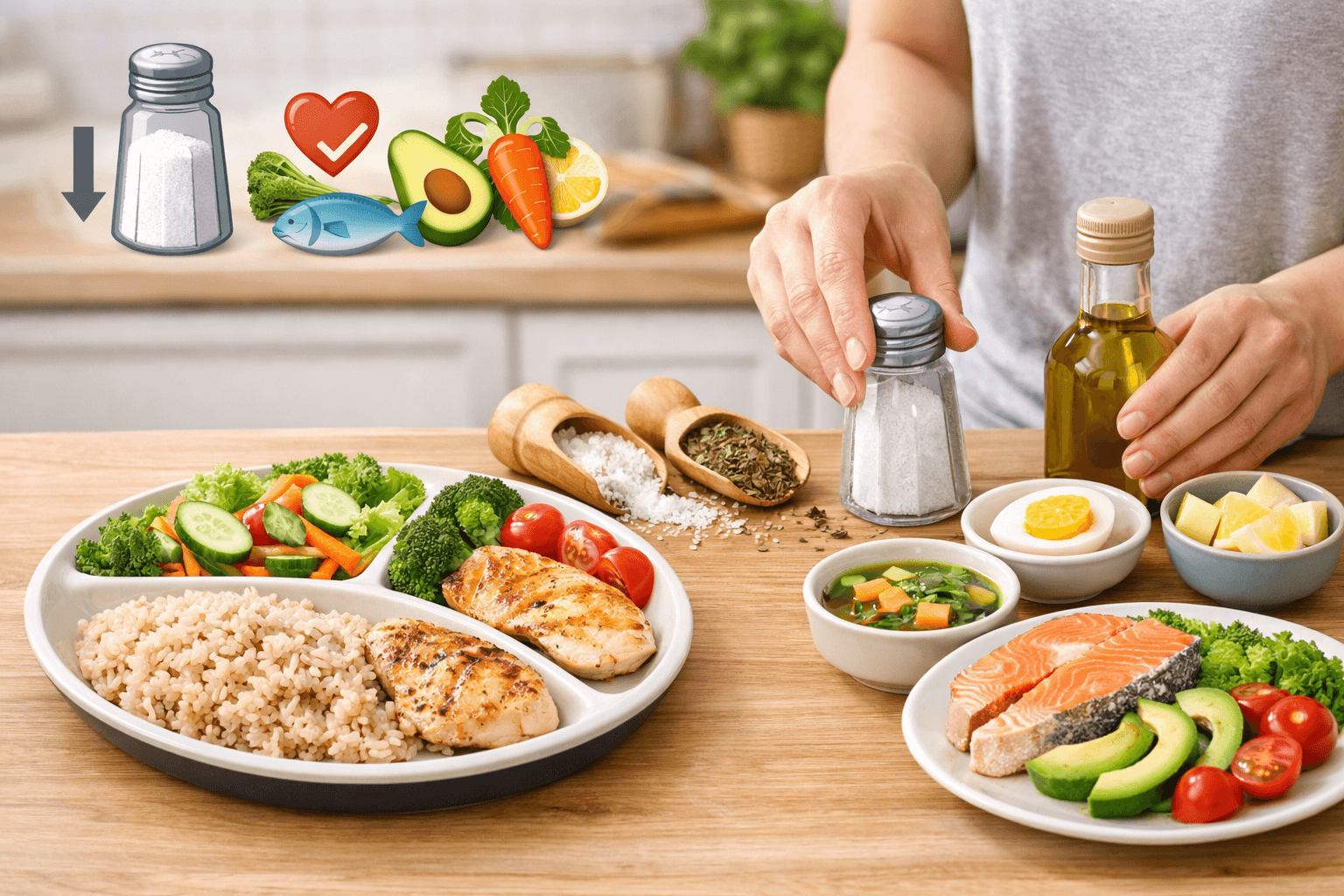
- Tackle the biggest sources first: start with salty snacks, deli meats, instant noodles, pizza, packaged soups and sauces. This is often more practical than simply cutting a pinch of salt from a vegetable dish.
- Season foods less salty over time: reduce salt, soy sauce or fish sauce gradually so the palate can adjust. Use garlic, onion, ginger, pepper, lime, herbs and salt-free seasonings to add flavor.
- Prioritize minimally processed foods: choose fresh or frozen vegetables and fruit without added salt, eggs, beans, fresh meat and fish, and whole grains to make sodium easier to control.
- Replace foods rather than skipping meals: reducing sodium does not mean cutting calories, protein, dairy or other food groups needed for growth. If you remove sausages, replace them with eggs, beans, fish or fresh, unseasoned meat, depending on the meal.
- Set household rules: do not keep the salt shaker and dipping sauces on the table; adults should also eat less salty food so children do not have to follow a separate diet.
Sodium comes not only from table salt but also from many additives and processed foods. A sustainable approach therefore combines label reading, product substitutions and changes to cooking methods rather than searching for a single “salt-free” product (according to FDA).
A quick example of calculating daily sodium intake
Hypothetical example: a 7-year-old eats packaged bread containing 220 mg of sodium for breakfast, has one snack package containing two servings at 150 mg per serving, and eats canned soup containing 600 mg of sodium for lunch. These three choices alone provide:
220 + (2 × 150) + 600 = 1.120 mg natriThis figure does not include cheese, dipping sauces, dinner, milk or other foods. Compared with the reference level of 1,500 mg per day for children aged 4–8, the family should review the snack and soup first rather than simply removing salt from dinner. This is an illustration, not a meal plan or the sodium content of any specific brand.
How to check your changes
- Record the foods and serving amounts the child eats in one day, paying particular attention to snacks, dipping sauces, fast food and processed foods.
- For each packaged product, multiply the sodium amount in milligrams per serving by the number of servings the child actually eats.
- Compare at least two products of the same type using the same weight or serving size.
- Check that the child is still consuming enough energy, protein and a variety of food groups; do not replace sodium reduction with skipped meals or cutting out too many foods.
- After one to two weeks, identify the sources that recur most often and prioritize changing those sources.
When should you consult a doctor or dietitian?
- The child has been diagnosed with high blood pressure, kidney disease, heart disease or a condition requiring sodium restriction.
- The child eats very few types of food, is losing weight, has poor growth or shows signs of nutrient deficiency after the family has independently cut out multiple food groups.
- The child needs to use formula, medical foods or a therapeutic diet, but the parents do not know how to adjust sodium intake.
In summary: Start by identifying the main sources of sodium in a child’s diet: salty snacks, pizza, deli-meat sandwiches, soup, noodles, bread, cheese and processed foods. Then check the serving size, sodium in milligrams and %DV on the label; finally, replace the biggest sources with less processed options. Meals do not need to become an extreme restrictive diet, but total daily sodium should be monitored, and professional advice should be sought if the child has a specific medical condition.
Reference source
- Top Food Contributors of Sodium Intake in US Children and Adults Aged 1 Year or Older, National Health and Nutrition Examination Survey, August 2021–August 2023 — Centers for Disease Control and Prevention, 2026.
- About Sodium and Health — Centers for Disease Control and Prevention, 2026.
- Sodium on the Nutrition Facts Label — U.S. Food and Drug Administration.
- Sodium in Your Diet — U.S. Food and Drug Administration.
- Sodium reduction — World Health Organization.
- Dietary Guidelines for Americans, 2020-2025 — U.S. Department of Agriculture and U.S. Department of Health and Human Services.
